
FORMA
Design Archive
@designedbyforma
Recent Posts
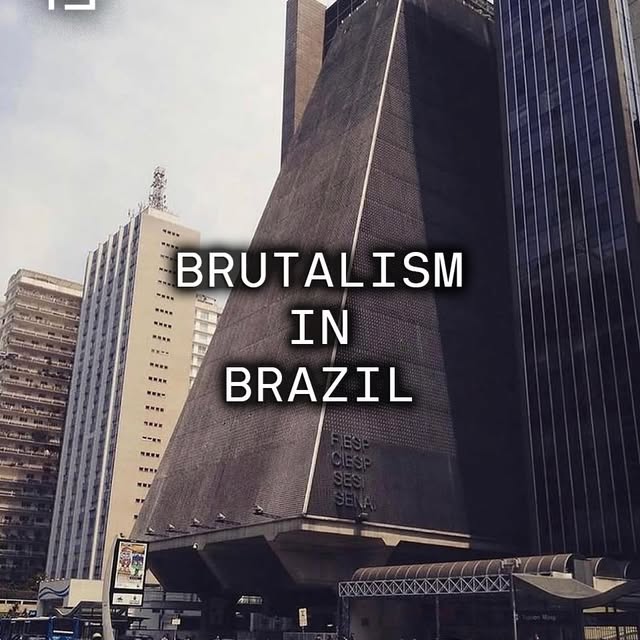
Brutalism in Brazil Born out of the country’s strong modernist movement, brutalism in Brazil was shaped largely by a push for public buildings, universities, and cultural spaces through the mid to late 20th century. Concrete became the material of choice not just because it was affordable and strong, but because it let architects experiment with new structural ideas. It ended up becoming a practical, forward-thinking way to build on a large scale. Some of the most iconic examples include the Paulo Mendes da Rocha House, the Faculty of Architecture and Urbanism at the University of São Paulo, SESC Pompéia, and the Copan Building. Each one shows a different side of Brazilian brutalism, from intimate residential design to massive civic landmarks. #brutalism #brazilianarchitecture #paulomendesdarocha #modernistarchitecture #brutalistarchitecture
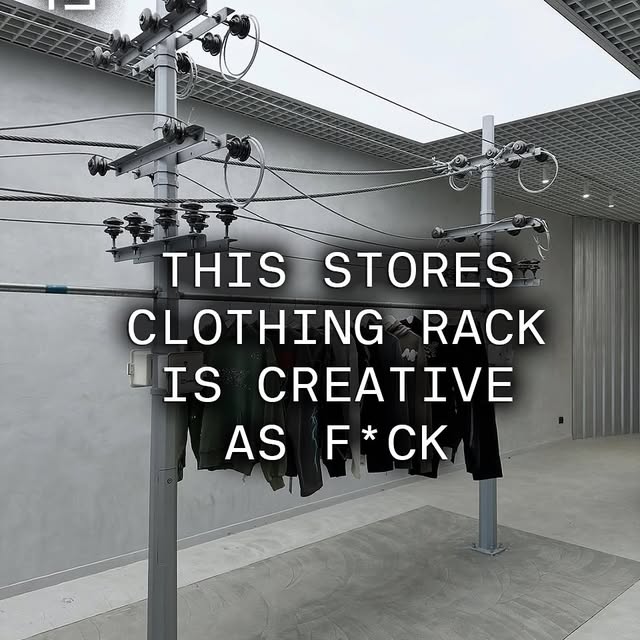
Designed by: @jaywalking.in Designed to look like an electrical power line, this installation turns a simple clothing rack into a full-on sculptural piece. The metal poles, cables, and insulators are all carefully recreated, transforming something totally ordinary into a piece of industrial art. It’s a clever example of how retail design can be both functional and conceptual, taking everyday infrastructure and reimagining it as part of the shopping experience. #retaildesign #interiordesign #visualmerchandising #industrialdesign #storedesign #conceptstore #designinspiration
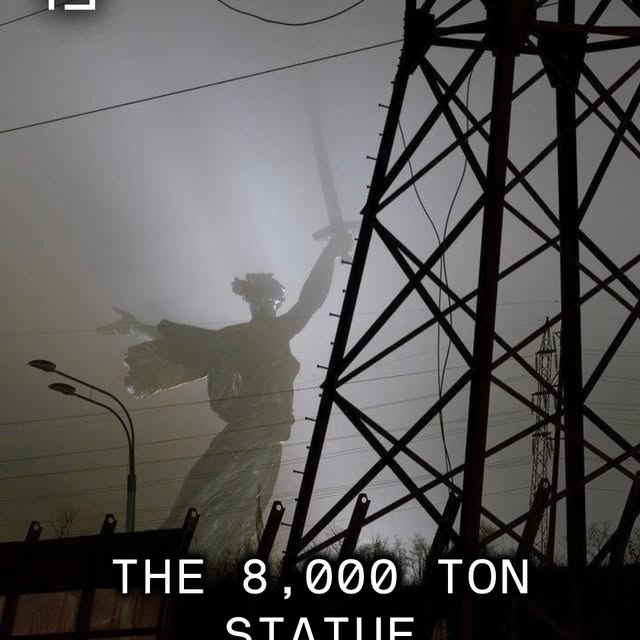
The Motherland Calls statue in Volgograd, Russia, is a monumental tribute to the Battle of Stalingrad, symbolizing a woman calling her people to defend the motherland. Completed in 1967, it was the tallest statue in the world at 85 meters from base to sword tip and remains the tallest statue of a woman globally. Designed by sculptor Yevgeny Vuchetich and engineer Nikolai Nikitin, it is made of concrete reinforced with over 7,000 tons of steel, and its hollow interior helps it withstand strong winds. The statue’s sword alone is 33 meters long and weighs 14 tons, while her outstretched arm spans 20 meters, making it one of the largest in the world. via @beams.archive ℹ️ We do not own the rights to these images. If you do and would like to be credited or have them removed, please DM us! #motherlandcalls #brutalist #wwiimemorial #brutalism #historytravel

It’s kind of funny how a lot of iconic furniture wasn’t designed by “furniture designers” at all, but by architects. People like Charles and Ray Eames with the Eames Lounge Chair, Eero Saarinen with the Tulip Chair, and Marcel Breuer with the Wassily Chair all started out designing buildings. It actually makes a lot of sense though. Architects are trained to think about how people move, sit, rest, and live in a space. So when they shrink that thinking down to a chair or a table, you end up with something that just works really well. It’s not just about how it looks (although it usually looks great), it’s about comfort, balance, and how it fits into everyday life. A lot of these pieces also came from experimenting with new materials at the time, like bent plywood or tubular steel. Architects were already pushing boundaries in buildings, so they brought that same mindset to furniture. That’s probably why so many of these designs are still around today. They’re simple, practical, and just feel right to use. #furnituredesign #midcenturymodern #interiorinspo #designclassics #interiorstyle
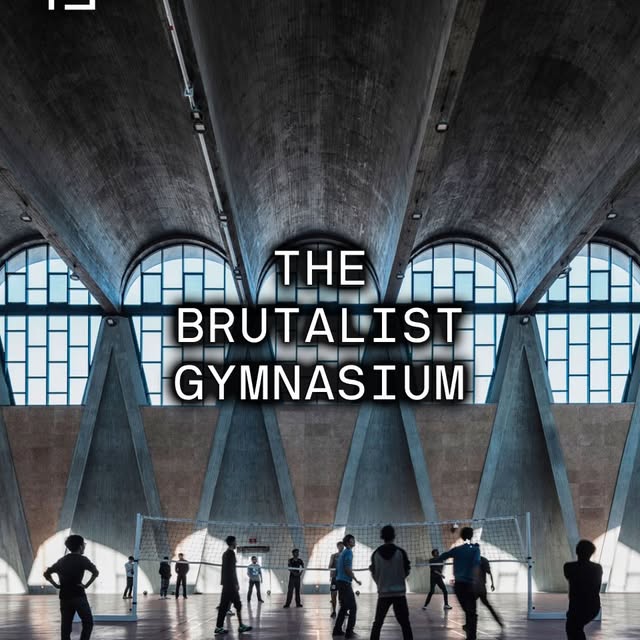
The Gymnasium of New Campus of Tianjin University by Li Xinggang is pretty stripped back, but still seriously impressive. Built for Tianjin University’s new campus, it’s made to handle everything from sports to big events, so the whole design is just about making that work well. What makes it stand out is the structure. There’s this strong steel frame that repeats across the building, creating a rhythm that feels way bigger than it actually is. It’s not decorative at all, but those repeating shapes give it a real sense of scale and presence. From the outside it’s calm and solid, almost like one big block. Inside it opens up into this huge, clear space with loads of room to move and light coming in at the right spots. It’s very function-first, but not boring in the slightest. The repetition and scale do all the talking — it just quietly looks great without trying too hard. It’s a fairly modern build, but you can feel a subtle nod to older brutalist ideas in the way it handles mass, structure, and repetition. Photography by: Haiting Sun, Terrence Zhang, Guangyuan Zhang & Yuan Huang. #architecture #brutalism #modernarchitecture #designinspo #concrete
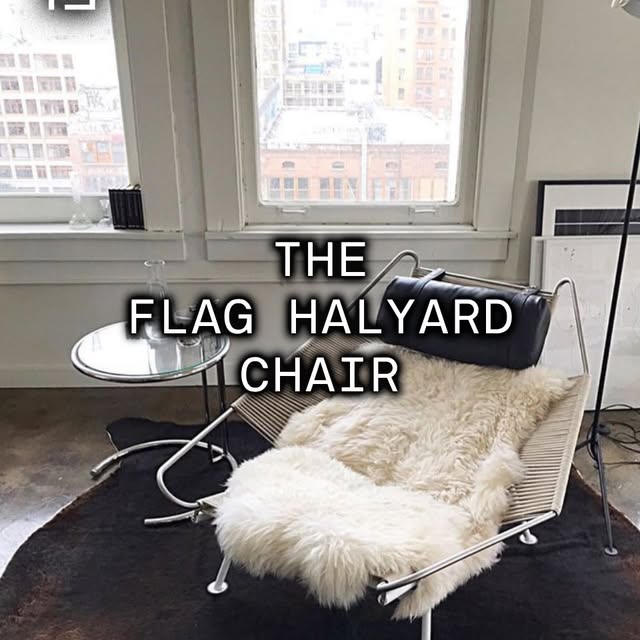
The Flag Halyard Chair, known as PP225, was designed in 1950 by Hans J. Wegner and is produced by PP Møbler. Its design shows clear influence from military field chairs used by soldiers, focusing on simple, durable materials and a low, reclined form suited to rest. It features a bent steel frame shaped to create its laid-back position. Instead of traditional upholstery, the seat is made from flag halyard rope, tightly wrapped by hand around the frame. This creates a flexible surface that supports the body without fixed cushioning. The materials are minimal, using stainless steel for the structure and strong rope for the seat. A sheepskin is often added on top, though it is not part of the core construction. Production involves forming and welding the steel frame, followed by the manual wrapping of a large amount of rope, which is a time-intensive step in the process. We do not own the rights to these images. If you recognise any as your own and would like credit or removal, please DM us. #chairdesign #interiorstyle #minimalhome #designinspiration #designdetails
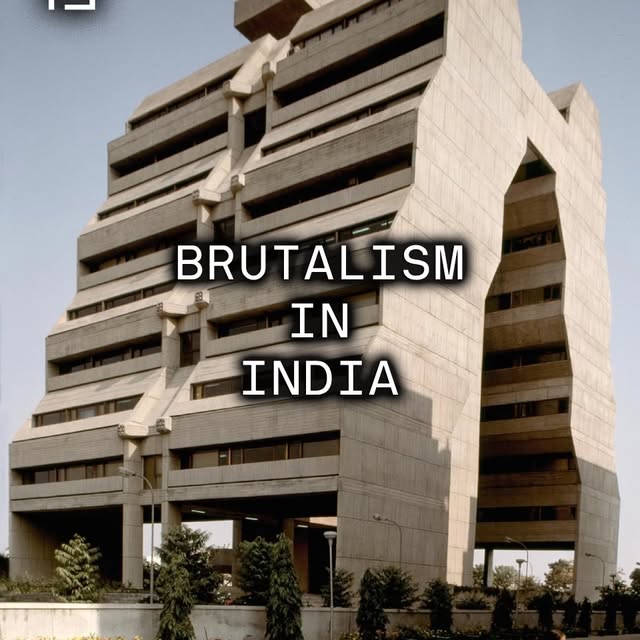
Brutalist architecture in India has a surprisingly bold and experimental past. After independence in 1947, the country was eager to define a modern identity, and concrete became its unlikely hero. Enter Le Corbusier, the legendary architect invited to design the city of Chandigarh. His work there, with raw concrete, geometric forms, and no-nonsense functionality, set the tone for a whole movement. Indian architects took that foundation and ran with it, adapting Brutalism to the local climate and culture. Buildings were not just stark concrete blocks. They included clever shading, open courtyards, and natural ventilation to handle the heat. The result was structures that feel both heavy and surprisingly human. While Brutalism can look intense at first glance, in India it often tells a story of ambition, independence, and creativity, building a new future from the ground up. Slide 2: Shaun Fynn Slide 3: Peter Sereyeni Slides 6 & 11: @they_lost_i_found Slide 8: Ben Hosking Slide 9 & 12: @cemalemden Slide 10: Ishita Sitwala We do not own the rights to these images. We have credited all identifiable sources. If you recognise any image as your own and would like credit or removal, please contact us via DM. #brutalism #indianarchitecture #designinspiration #architecturelovers #modernism
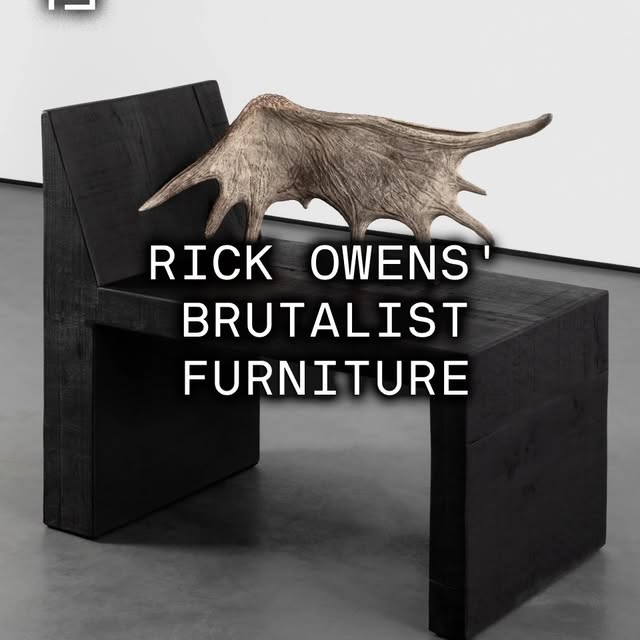
Rick Owens’ furniture is basically an extension of his fashion: dark, heavy, minimal, and a bit severe. He started designing pieces for his own spaces in the late 2000s, using materials like concrete, marble, alabaster, and bone-like forms. The result is closer to sculpture than normal furniture. He’s said he was influenced by ideas like “a fur on a rock in a cave,” which fits the rough, primitive feeling of the work. The pieces are often large, angular, and not really focused on comfort in a conventional way. Owens has described his approach as closer to couture than mass production, meaning everything is made slowly, in small runs, with a focus on material and presence over practicality. He’s also said comfort is not the main goal, and he prefers furniture that feels strict or monumental rather than easy or casual. #rickowens #designfurniture #brutalinteriors #modernsculpture #contemporarydesign
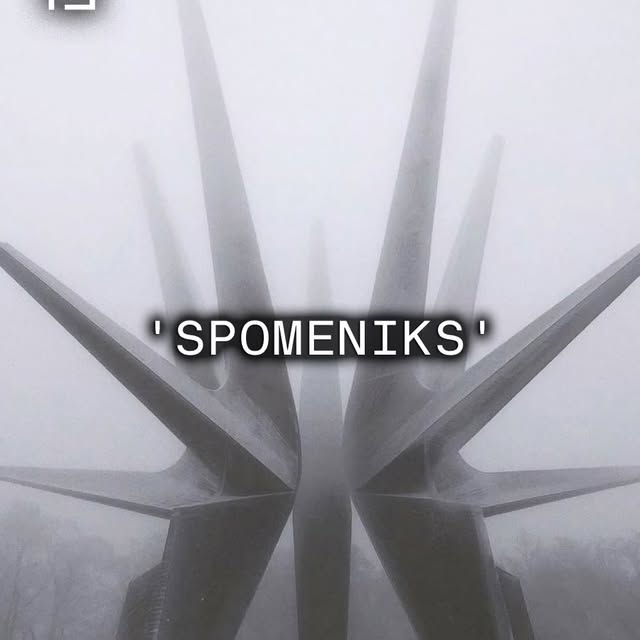
Spomeniks are large monuments built mostly in the former Yugoslavia during the 1960s–1980s. The word spomenik simply means “monument” in several South Slavic languages, but today people usually use it to describe a specific group of bold, abstract memorials commemorating events from World War II, especially resistance against fascism. What makes them interesting is they don’t look like traditional statues of generals on horseback. Many resemble alien structures, giant concrete flowers, or sci-fi architecture. That was intentional. They were designed to feel universal, emotional, and forward-looking rather than tied to one ethnic group or political figure. After the breakup of Yugoslavia in the 1990s, many were neglected, damaged, or forgotten. But in recent years, they’ve gained a cult following among architects, photographers, and travellers. Many of these monuments have been documented in the fantastic book Spomenik Monument Database by @spomenikdatabase and @fuelpublishing. We do not own the rights to any of these images or videos. If you do and would like credit or removal please DM us. Image 3: @spomenikdatabase Image 4: Jonathan ‘Jonk’ Jimenez #spomenik #brutalism #hiddenhistory #abandonedplaces #architecturelovers

Photographed by @herwig_photo after years spent documenting Soviet-era bus stops across Kazakhstan, Georgia, Ukraine and beyond, this project captures a remarkable body of roadside architecture shaped by travel, research and long-term observation. These structures, often found in remote locations, range from surreal sculptures to bold modernist forms, each reflecting a distinct sense of place. Many were created by local artists and unknown designers, often working outside formal architectural circles. Some are clad in mosaic, others shaped like flying saucers or folding fans. What unites them is a quiet defiance of uniformity. Bursts of creativity planted along otherwise empty roads. Built under a system known for conformity, these stops became spaces for architectural play and local expression. Today they stand as artifacts of an era and a reminder that even the most overlooked spaces can be shaped with imagination. The project is also accompanied by a documentary and book, offering further context on the bus stops and the journey to document them. #sovietarchitecture #roadsidearchitecture #brutalistdesign #sovietbusstops #architecture
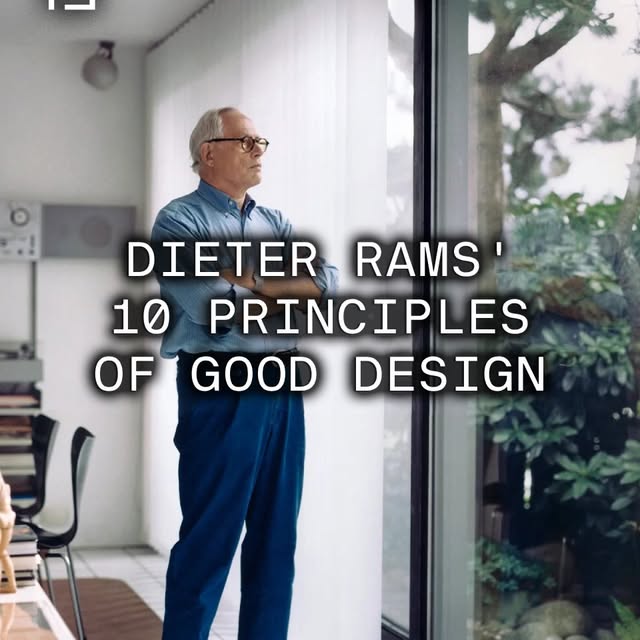
Dieter Rams’ 10 principles of design remain remarkably relevant: good design is innovative, useful, honest, long-lasting, and as little design as possible. What makes them enduring is that they go beyond aesthetics. They offer a framework for creating products, systems, and experiences that are thoughtful, clear, and built to last. In a culture often driven by novelty and noise, Rams’ idea of “less, but better” feels especially sharp. Decades later, these principles still shape how we think about functionality, sustainability, and simplicity. Not as style, but as discipline. #designthinking #industrialdesign #dieterrams #minimaldesign #creativeprocess
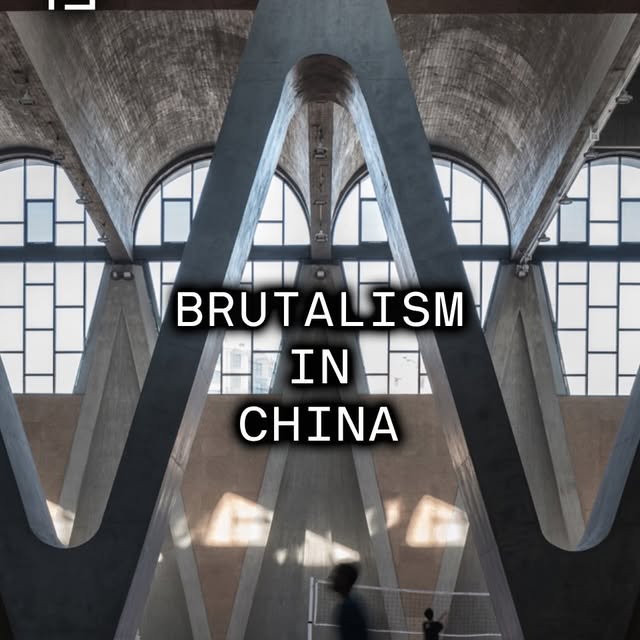
Brutalism in China China’s take on Brutalist architecture is often less about copying the raw concrete megastructures of the West and more about adapting Brutalism’s bold, monumental spirit to local history, politics, and rapid urban change. Emerging in the mid-20th century, Chinese Brutalism appeared in civic buildings, factories, and state institutions, where exposed concrete and heavy geometric forms symbolized strength and permanence. In contemporary China, architects have reinterpreted Brutalism in more experimental ways. Rather than purely austere concrete blocks, many designs combine rough textures, sculptural massing, and references to Chinese landscapes, courtyards, or infrastructure. Some buildings lean into fortress-like forms; others play with abstraction, making structures resemble mountains, machines, or even digital systems. A striking example is the Digital Beijing Building, designed to evoke an integrated circuit or barcode, turning the language of technology into architecture. Elsewhere, architects such as Wang Shu have used raw materials and monumental forms in ways that feel both ancient and futuristic, blending Brutalist weight with regional craft traditions. What makes Chinese Brutalism especially interesting is this tension between power and poetry. It can feel imposing, even severe, but it often carries deeper ideas about memory, urbanization, and identity. In a country transformed at extraordinary speed, these buildings often reflect that scale and intensity. For casual observers, Chinese Brutalism stands out because it doesn’t just look “heavy” or dramatic—it often tells a story. Whether inspired by infrastructure, ruins, or digital culture, it turns concrete into something surprisingly expressive. That mix of rawness and imagination is what keeps it compelling. ℹ️ We do not own the rights to these images, if you do and would like to be credited or have them removed, please DM us 🩶 #brutalism #brutalistarchitecture #chinaarchitecture #architecturelovers #designinspiration
Similar Influencers

エイトデザイン - リノベーション-新築住宅を名古屋&東京&埼玉&岐阜で

Humphrey Munson

Design + Magazine

ELLE Décoration France

Bienvenue Chez Ginette

BCblacksmith - Miran Elbakyan

MAIS INTERIORES

Yellowtrace

Youssef Damaj

🥯

Natty’s Home Decor

vivian 唯唯安

Towanda Elle | Stylist, Designer, Creative Director

Alexandrea 🤘🏽 Creative color + Hair extensions

Nurul Nabilah

Kenneth Ling

BonBon Bell

Adriana ▫️Hotelchic Interieur

L'oeil d'Eos - Eloïse & Luc

Hana Lerner Arquitetura

House of Grey

세니

Yomuz lighting

eousemacrame

Garance 🌷 Colorful Interior 🌞

Golden Key Home Staging | Bay Area

Benjamin Weaver

Scarlett James Home Decor INC.
Maria Rubleva