
Benjamin Weaver
Exploring art, design and culture
“The writing is clever and it takes me to a world of elegance.” — Rick Owens
Represented by @se_comms
Recent Posts

The London List is a digital publication exploring art, architecture and interiors, from carefully researched and thought-provoking articles to interviews with artists, makers and industry insiders. With a particular focus on the defining aesthetic movements of the twentieth and twenty-first centuries, the aim is to provide a critical voice on design, both past and present, discussing relevant and prescient topics with openness, honesty and balanced academic rigour. Pictured founder and editor-in-chief, Ben Weaver, at home in London, photograph by Billal Taright @billaltaright
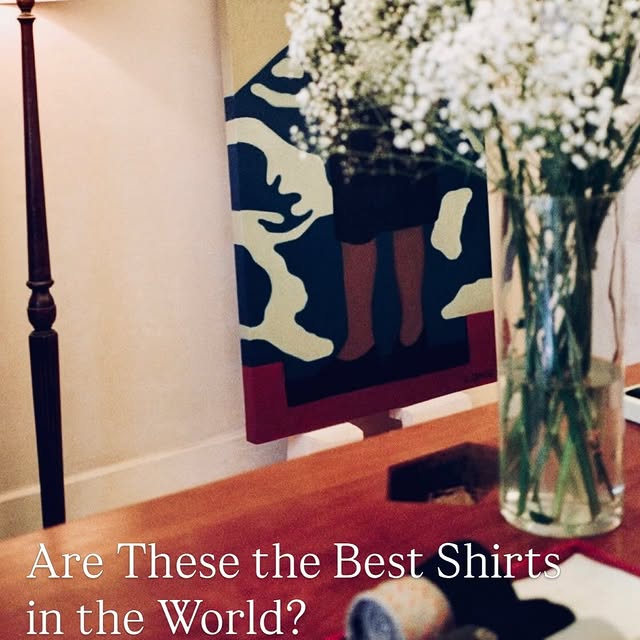
@speciale324, founded by George Marsh and Bert Hamilton Stubber, produce incredibly elegant shirts which, despite their Italian origins, speak of Serge Gainsbourg, Jacques de Bascher, nights at Castel, and that slightly louche uncle—the one with the sailing boat you see only on holidays—without ever veering into pastiche. They evoke a lost glamour, the sort of detail Tom Ford fixates on in A Single Man, where George, played by Colin Firth, opens a chest of drawers to reveal rows of perfectly pressed white shirts. On a recent visit I was drawn to a shirt in cornflower-blue linen, inspired by one George’s father wore, a detail that lingered, adding a faintly Proustian depth. This isn’t “narrative” or salesmanship, but the result of genuine passion and artistry. The atelier is beautifully judged—nothing overbearing—yet distinct, an extension of a visual universe rooted in quality and instinctive good taste, rather than any desire to construct a “look”. Speciale is remarkably discreet, tucked into the less salubrious end of Portobello Road, far from Savile Row or Chiltern Street. Designed to evoke a Florentine neighbourhood tailor, it’s a thing of beauty: copper rails, an oval “portal” leading to the panelled cutting room beyond, suggesting a remnant of the age of Gio Ponti and Piero Portaluppi. They don’t advertise or court attention—I’m not even sure how I first came across them. Their shirts, however, are close to perfection: made in Naples, fabrics woven in Como, entirely hand-sewn, with exquisitely soft sleeve heads. For those, like me, captivated by La grande bellezza, this feels like an improbable offshoot in West London. It isn’t only shirting. George, a bespoke tailor trained in Florence—notably with Lorenzo Albrighi, the last tailor trained by Lettorio Speciale—produces supremely elegant clothing, such as the blazer in image three. The silhouette descends directly from Speciale. “There’s so much expression in this style,” Bert says. “The hand of the maker is so visible because there’s that much more hand-stitching.” For those tired of fashion’s monotony, in search of something timeless, beautifully made and possessed of genuine style, look no further.
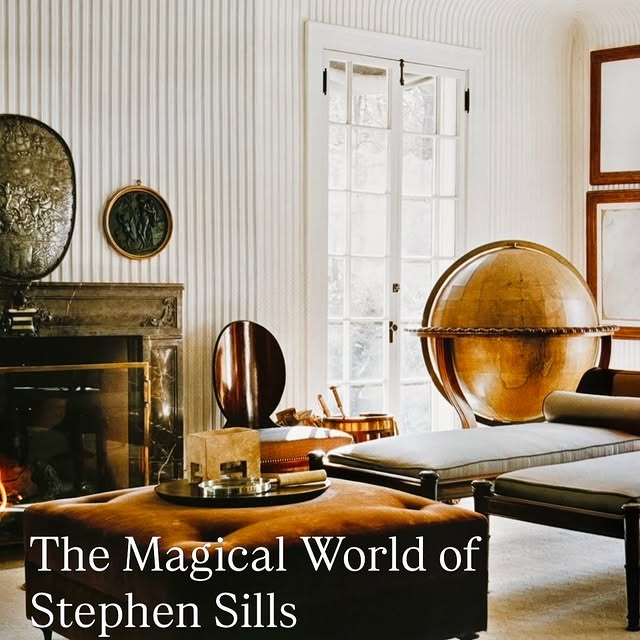
Whenever anyone asks me to name my favourite contemporary designers, Stephen Sills comes to mind, who, while employing a largely restrained palette, never risks monotony, instead using furniture and art to create spaces which, whilst respectful of the past, are perfectly attuned to modern life. Although every detail is resolved beautifully, his interiors never feel over-engineered or, for that matter, over-designed. At a time when so many rely on the past as a crutch, simply copying details verbatim, Sills, with an almost encyclopaedic knowledge of design history, uses such references intelligently, never taking directly but instead reinterpreting, and in doing so developing a unique visual language. This can be seen to great effect at his own home, Hi-Low Farm, a 22-acre 1920s estate in Bedford, New York. Here, Sills has assembled an extraordinary collection of furniture and art within what he describes as a “laboratory”, explaining, “I wanted to create something no one had seen before. I didn’t listen to anybody’s opinion.” The result is truly magical, combining an outstanding array of works, including a globe from Rudolf Nureyev’s apartment, alongside pieces once owned by Cecil Beaton, Carlos de Beistegui and Bill Blass. In the guesthouse, formerly a slate-roofed garage, the ceiling, inspired by the floor pattern of Pauline de Rothschild’s Château Mouton, has the feel of a Venetian palazzo. For his own floors, Sills laid rough marble bricks, stained white “like cobblestones”, a somewhat unexpected choice that led John Galliano to exclaim, “It was like sleeping on the most glamorous eighteenth-century French street.” The overall mise-en-scène is like nothing else, an elegant amalgam of careful curation and innate good taste that, despite a fastidious eye for detail, in a similar vein to Bunny Mellon’s celebrated Oak Spring, feels utterly effortless. It’s perhaps no surprise Karl Lagerfeld called it “the chicest house in America”. Photographs by François Hallard from “Stephen Sills: Decoration” @rizzolibooks @francoishalard @stephensillsassociates #stephensills #interiordesigner #cytwombly #albertogiacometti #pablopicasso
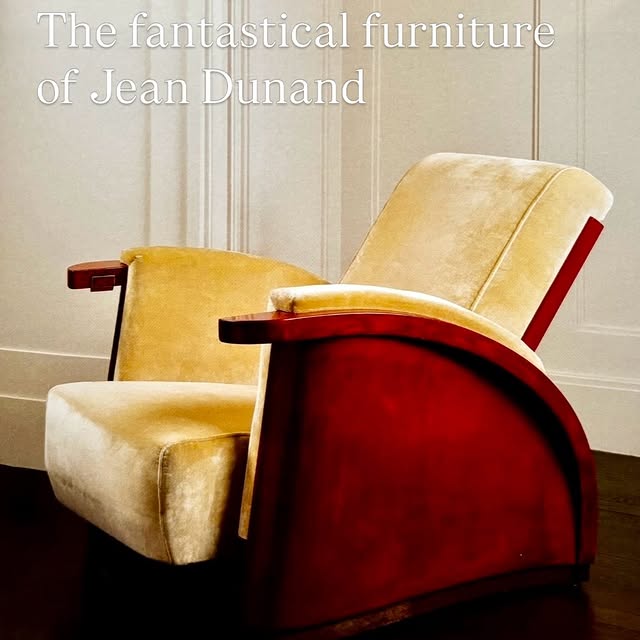
Swiss-born French lacquer maître Jean Dunand is widely considered one of Art Deco’s preeminent artists and designers. The son of a goldsmith, later trained as a sculptor, Dunand was the first Westerner to master the complex art of urushi—the Japanese word for both the sap used to make lacquer and the finished object itself—after apprenticing with the Japanese artist Seizo Sugawara. He was also the first to use “coquille d’œuf”, crushed eggshell, as a decorative element, and it very soon became a signature—so popular, in fact, that Dunand kept a chicken coop in the courtyard of his Parisian atelier to help meet demand. Often thought of for his dinanderie vases—with their strikingly modern, pure lines—Dunand’s furniture, seen here, was particularly extraordinary, its decoration somewhere between Futurism and Cubism, breaking away from the fluidity of Art Nouveau to create something more graphic and resolutely modern. All images from the wonderful book “Cheska et Bob Vallois: 50 ans de passion Art Déco” (2025), Éditions Courtes et Longues @edcourtesetlongues @galerievallois Image 1: a red lacquered “fauteuil de boudoir” c. 1930. Image 2: two tier pedestal table in red lacquer with coquille d’œuf tops, c. 1925. Image 3: a “fauteuil de fumeur”, or smoker’s armchair, in red lacquer with an integrated ashtray in the right arm, c. 1925. Image 4: nesting tables in black lacquered wood, their tops inlaid with patinated metal. Image 4: a five leaf lacquered screen with a geometric pattern, c. 1927. Image 6: a two tiered table in black lacquer and coquille d’œuf, c. 1923. Image 7: a two door collector’s cabinet with a geometric pattern of golden lacquer with coquille d’œuf relief. Image 8: a low table with a geometric pattern of brown, gilt and black lacquer with silver lacquer relief, c. 1930. #jeandunand #lacquer #modernism #artdeco #20thcenturydesign
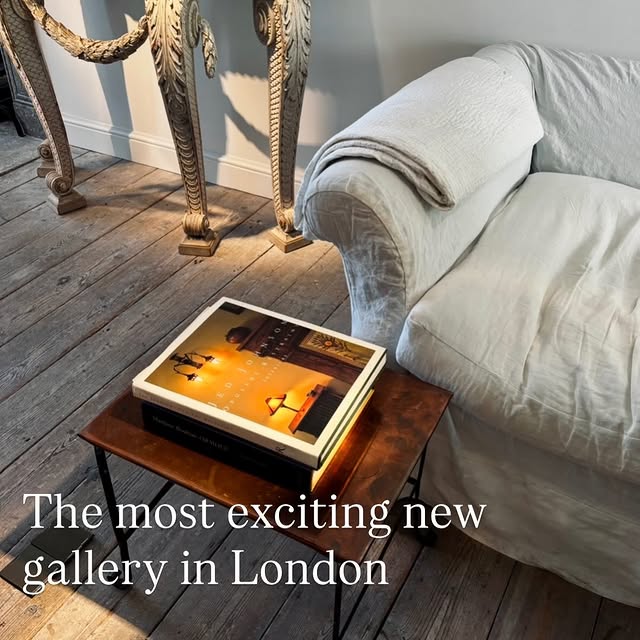
London’s Pimlico Road has for decades been a centre for art and antiques, and an absolute must for any designer visiting the city. However, with eye-watering rents, it’s unusual to see galleries with the sort of exuberance and unexpected eye for curation found in Saint-Germain-des-Prés. That has now changed with Molly Alexander @mollyalexanderltd, who, after a decade working at Jamb @jamb_london just around the corner, has gone it alone and opened her own eponymous gallery. Here she presents a curious array of antiques and art, ranging from a pair of exceptionally elegant, marble-topped, white-painted consoles in the manner of William Kent, to mid-century iron chairs, a colossal pair of Irish elk antlers from Carlton House, and a similarly imposing nineteenth-century portrait of a white poodle. As most of you know, my general proclivity is for the sort of pared-back French decorative arts ushered in by Jean-Michel Frank, Jacques Adnet and Eyre de Lanux et al, but Alexander has created such an alluring mise en scène that I left the gallery wanting to clear out and start from scratch. Such stock could easily feel old-fashioned—we hear again and again about unfashionable “brown furniture”—but here there is a lightness and youthfulness that makes every item feel entirely relevant to modern life. This is, of course, in large part down to curation, and Alexander has a light touch and exceptional taste, akin to that of Jim Ede at Kettle’s Yard, whereby one senses a rediscovery and recontextualisation of the past. As she herself puts it, “The pieces in the collection emphasise a quiet, strong and muscular form—a curated collection that nurtures an inherent spirit of age, and preserves the untouched.” It’s well worth a visit, and, given that it is, at present, a fledgling enterprise already operating at this level, I, for one, look forward to seeing what comes next. As an aside, our next article will be looking at the thorny topic of curated interiors. Photographs @the_london_list #antiques #antique #decorativearts #artcurator #collectibledesign
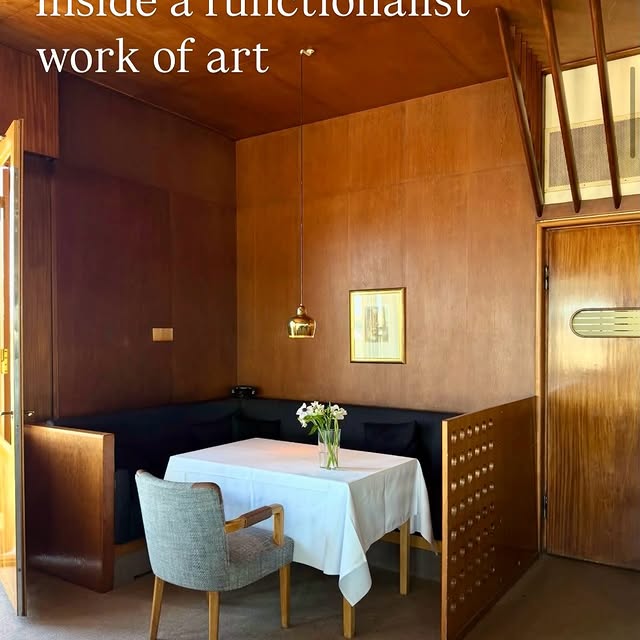
Alvar and Aino Aalto’s Restaurant Savoy in Helsinki, a modernist gesamtkunstwerk — a total work of art — was created in 1937, embodying their human-centred philosophy of functional yet friendly design. Overlooking the Esplanade Park in the heart of the city, flanked by terraces on three sides and long and narrow in plan, it’s often compared to the saloon of a ship. The restaurant’s interiors show the Aalto’s preference for welcoming, comfortable furniture and sensitivity towards high-quality, neutral materials — a rejection of what they perceived to be the “cold” industrialism of early modernism. In 2019, Ilse Crawford of Studioilse @studioilse_ was commissioned to restore and renew the interiors, albeit with a notably light touch, working in collaboration with Artek, the Helsinki City Museum and the Alvar Aalto Foundation. The original structure, and furnishings were carefully restored and reinstated, alongside a restrained palette in keeping with the Aaltos’ desire for a “tranquil backdrop”, in which the architecture is only completed once people are eating and talking. One of the restaurants most iconic creations, still made by Iittala @iittala, is the free-form Savoy vase, originally, and catchily titled, “The Eskimo Woman’s Leather Breeches”, its irregular outline allowing flowers to fall and tumble nonchalantly towards diners, a deliberate break with the rigid formality of fine dining at the time. Image 1 c/o @marielouise_hoestbo All other images c/o @savoyhelsinki #alvaraalto #ainoaalto #finnishdesign #midcentury #midcenturymodern
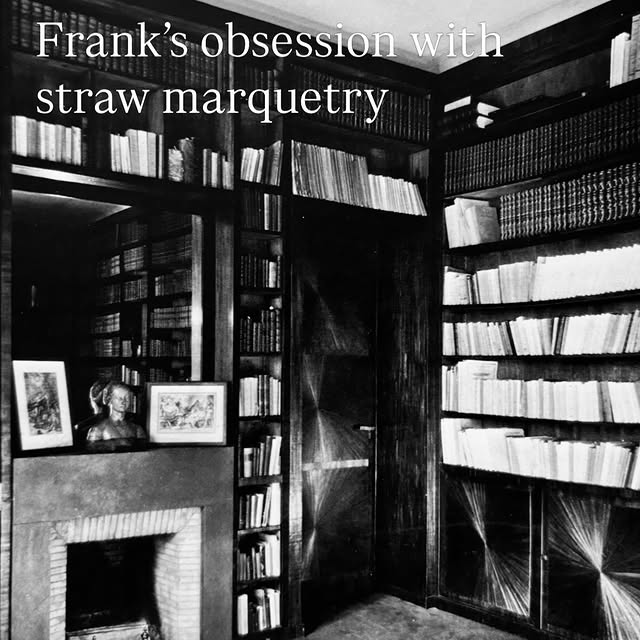
Historically, luxury was, by and large, associated with materials such as ivory, mahogany, bronze and marble; anything outside that narrow register was deemed secondary, or worse, ersatz. French decorator Jean-Michel Frank (1995-1941) dismantled such a hierarchy, introducing materials such as white plaster, terracotta and even concrete, thereby quietly recalibrating his clients’ expectations and ushering in what we now consider contemporary design. Indeed, his radical yet sophisticated style earned him the patronage of figures as diverse as Italian couturier Elsa Schiaparelli and “renegade heiress” Nancy Cunard, to American industrialists Templeton Crocker and Nelson A. Rockefeller. Despite constantly seeking out new methods and ways of working, Frank returned again and again to staw marquetry, a technique which, although popular since the seventeenth century, had never before been employed on such a scale. Beyond furniture such as tables and cabinets, he even panelled entire rooms, including the ceiling. Today, the obsession with all things Art Deco has once again propelled straw marquetry into the world of luxury interiors, a technique perfected by Lison de Caunes @atelierslisondecaunes, the granddaughter of celebrated designer André Groult @andregroult, who has recently worked on interiors for Cartier @cartier, Hermès @hermes and Guerlain @guerlain. Image 1: a library sheathed entirely in straw marquetry. Image 2: Jean-Michel Frank, in his straw marquetry-lined salon. Image 3: a three-fold screen, c 1932, in starburst straw marquetry. Image 4: a drawing room panelled in straw marquetry with an armchair in white leather. Image 5: the home of Armand Massard, with oak veneered walls, offering an alternative take on straw marquetry. Image 6: a bedroom with straw marquetry furniture. Image 7: Frank’s office, c. 1932, sheathed in straw marquetry with an oak desk and leather club chair. Image 8: side tables in natural straw marquetry and stained mahogany. Image 9: the drawing room at Frank’s home, c. 1930, with walls and ceiling covered in straw marquetry. #jeanmichelfrank #strawmarquetry #interiordesign #20thcenturydesign #designhistory

“There are no ugly women, only lazy ones,” Helena Rubinstein famously declared—which, from today’s perspective, belies her status as a proto-feminist pioneer. The quintessential self-made woman, four-foot-ten and “built like an icebox”, in the words of one acquaintance, Rubinstein’s personal journey from émigré to beauty scion is truly extraordinary. Indeed it’s difficult to underestimate the significance of her innovations for the culture of cosmetics and beauty. However, Rubinstein was as intuitive an art collector as she was a savvy entrepreneur, playing a similarly pioneering role in the recognition of African and Oceanic art—elevating such work from mere “ethnic artefacts”, as they were often categorised, to their rightful position on the world stage—displayed her extraordinarily diverse collection alongside a mesmerising array of paintings and sculpture by avant-garde modernists such as Chagall, Braque, Brancusi, Modigliani, Picasso and Miró. Image 2: Rubinstein, with some of the portraits she commissioned over the years, image c/o Helena Rubinstein Foundation archive. Image 3: the foyer in Rubinstein’s New York apartment, image c/o Kreeger Museum, Washington, DC. Image 4: Pablo Picasso’s Untitled (Madame XIX 27.11.55), 1955. © 2013 Estate of Pablo Picasso. Image 6: The Dalí room in her New York home. Photograph by Bradford Robotham. Image 7: Marie Laurencin’s Portrait of Helena Rubinstein, 1934. Courtesy of Private Collection, Stowe, Vermont © 2013 Artists Rights Society (ARS), New York/ADAGP, Paris. Image 8: Rubinstein looking at one of her early-American vases, 1940s. Photograph by Christian Moser. Image 9: Rubinstein’s living room, New York. Image c/o of Helena Rubinstein Foundation archive. Image 10: Rubinstein with Prince Artchil Gourielli-Tchkonia, in their New York home, image c/o MCNY/Gottscho-Schlisner/Getty. Image 15: Rubinstein in her Paris apartment, wearing an ermine-trimmed Dior suit, and standing in front of a painting by Miro and a Boule chest formerly owned by Louis XIV, image c/o Fashion Institute of Technology. © Successió Miro. #helenarubinstein #africanart #oceanicart #pablopicasso #salvadordalí
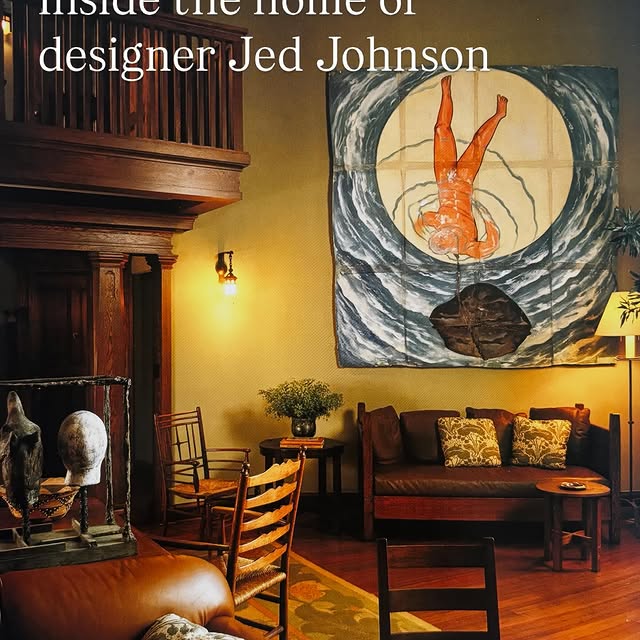
The seven-room duplex apartment of American designer Jed Johnson, and his partner, Alan Wanzenberg, in a gothic revival building, originally artists studios, on West Sixty-seventh Street, Manhattan. Here, the couple assembled an important collection of early twentieth-century English and American furniture, as a result of which, Johnson is often credited with the resurgence in popularity of the Arts & Crafts style previously deemed old-fashioned. “In an age noted for its “signature” designs, Johnson’s signature was grace,” proffers American architecture critic Paul Goldberger. “Johnson became one of the most celebrated interior designers of our time not by inventing a style or by creating anything anyone might call a “look”. Words that seem particularly pertinent to design today. Image 1: Francesco Clemente’s “Moon” presides over an oak sofa and table by Gustav Stickley. The bronze sculpture is by Mimmo Paladino. Image 3: a pair of lamps by W.A.S Brenson, as well as a sideboard, table and hanging lamp by Stickley. Image 4: a Stickley library table supports a New England Hampshire pottery lamp. The ladder back chair is by Sir Edward Lutyens. Image 5: in the library a gothic revival chair by French-born American Alexander Roux, foreground, as well as a rush-seat chair by William Morris. Image 6: a dresser and slatted oak rocking chair, again by Stickley. Photographs by John Hall from “Jed Johnson: Opulent Restraint” (2005) @rizzolibooks #jedjohnson #francescoclemente #williammorris #artsandcrafts #decorativearts
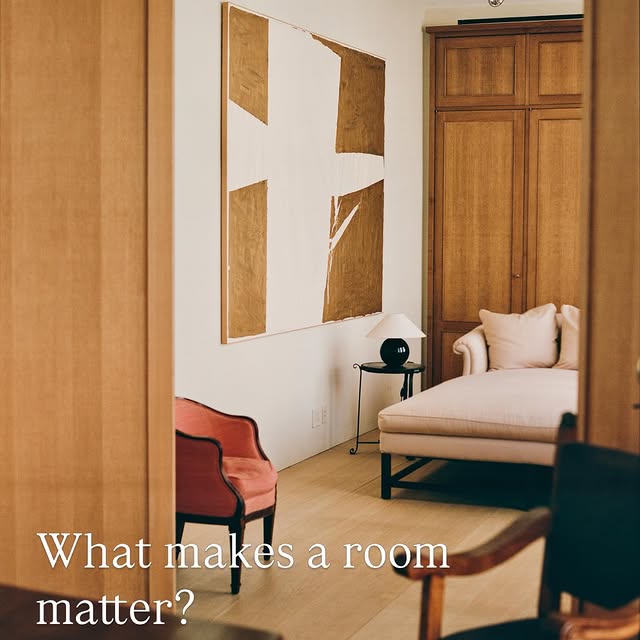
In our latest article, “What Makes a Room Matter?”, we speak with Casalta founders Catherine and Nathan Bruckner about the evolving language of interiors, from the shifting role of atmosphere and authorship to the blurred boundaries between collecting and design. Moving between Old Masters, modernist lineage, and today’s image-driven design culture, the conversation probes questions of taste and aesthetic authority, asking whether interiors are still shaped by discernment—or increasingly by performance, branding, and the quiet theatre of display. 🔗 See link in bio. #basquiat #jeanmichelbasquiat #axelvervoordt #artcollector #oldmasters
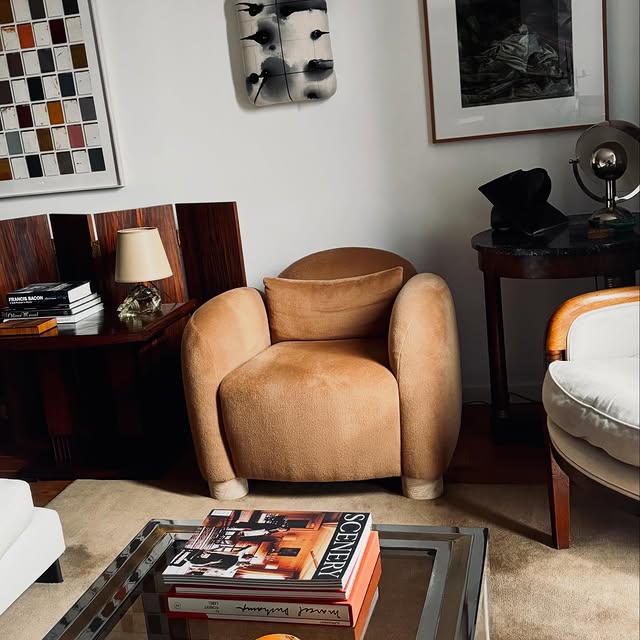
Home, London, where a work by Barcelona-based artist Nikolay Morgunov (b. 1993) @nikolaymorgunov hangs above Léo Sentou’s @leosentou fauteuil Bernard. Working with a restrained visual language, Morgunov constructs compositions in which rigid, predefined structures are disrupted by instinctive gestures, allowing order and instability to coexist on the same surface. “This piece captures a moment of interrupted self-destruction. It brings together comfort and violence, suggesting that calmness and inaction can sometimes be more dangerous than movement,” Morgunov explains of the work. “Its softness becomes a vulnerability, leaving the form open to pressure, manipulation, and control. The surface is built from two layers of material: one absorbent, the other resistant to ink. This creates a condition where the black matter can emerge but cannot sink back in, as if the object were slowly reclaiming itself.” Like much of Morgunov’s practice, the work unfolds through a tension between control and release: precise frameworks collide with gestures that feel almost accidental, while reflective surfaces—recalling still water—distort depth and perception. What remains is less a fixed image than a trace, capturing the quiet accumulation of time, pressure, and human presence. Photographs @the_london_list @sorondo_projects @juliana_sorondo #emergingartist #minimalism #minimalist #abstractart
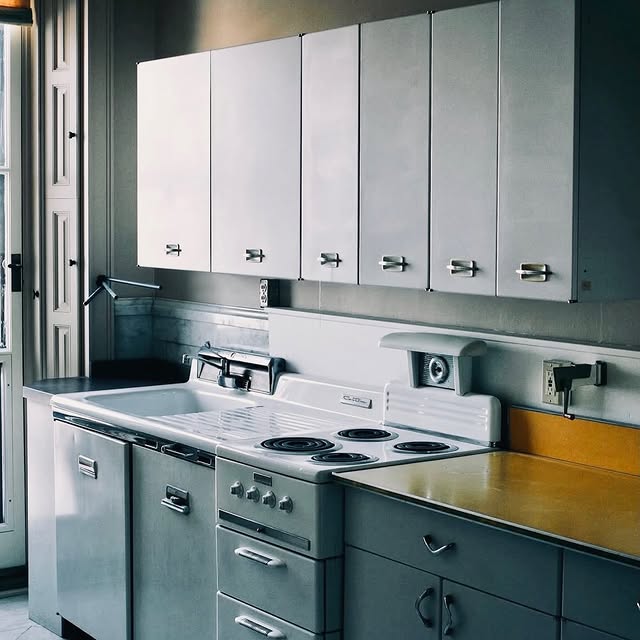
Pictured, a previously unseen private apartment at The Breakers, Rhode Island — a third-floor aerie beneath the eaves, which, since the house opened to the public in 1948, served as the home of the Vanderbilt family until 2018. Now under the care of the Preservation Society of Newport County, which acquired the “cottage” in 1972, the space is currently being restored and open to the public. These photographs by Edward Rollitt @edward_rollitt accompany an article by Remy Renzullo @remy_renzullo for the April edition of Town & Country Magazine @townandcountrymag @stellenevolandes. #architecture #interiorarchitecture #thebreakers #rhodeisland #kitchendesign
Similar Influencers

エイトデザイン - リノベーション-新築住宅を名古屋&東京&埼玉&岐阜で

Humphrey Munson

Design + Magazine

ELLE Décoration France

Bienvenue Chez Ginette

BCblacksmith - Miran Elbakyan

MAIS INTERIORES

Yellowtrace

Youssef Damaj

🥯

Natty’s Home Decor

vivian 唯唯安

Towanda Elle | Stylist, Designer, Creative Director

Alexandrea 🤘🏽 Creative color + Hair extensions

Nurul Nabilah

Kenneth Ling

BonBon Bell

Adriana ▫️Hotelchic Interieur

L'oeil d'Eos - Eloïse & Luc

Hana Lerner Arquitetura

House of Grey

세니

Yomuz lighting

eousemacrame

Garance 🌷 Colorful Interior 🌞

Golden Key Home Staging | Bay Area

Scarlett James Home Decor INC.
Maria Rubleva

Harmonious Homes