
The Future of KOL Marketing: AI, Virtual Influencers, and Beyond
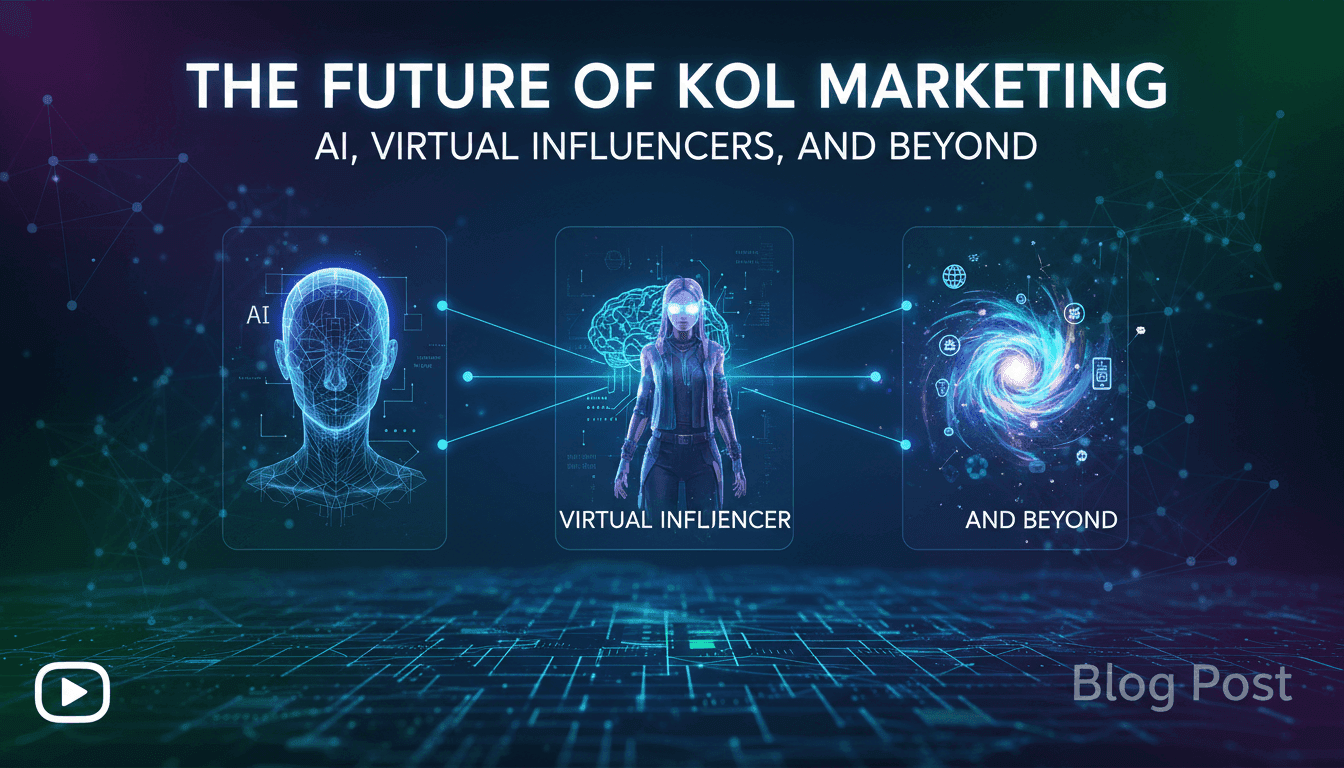
Table Of Contents
- The Evolution of KOL Marketing
- AI-Powered Influencer Discovery: The New Frontier
- Virtual Influencers: Digital Personalities with Real Impact
- Real-Time Platform Intelligence
- Predictive Analytics and Performance Forecasting
- The Rise of Micro and Nano-KOLs
- Cross-Platform Campaign Orchestration
- Authenticity in an AI-Driven World
- Natural Language Brief Processing
- The Future Landscape: What's Next for KOL Marketing
Key Opinion Leader (KOL) marketing stands at a technological crossroads. What began as simple celebrity endorsements has evolved into a sophisticated ecosystem where artificial intelligence, virtual personalities, and real-time data analytics converge to create unprecedented opportunities for brands. The traditional method of manually searching through static influencer databases and spending weeks vetting potential partners is rapidly becoming obsolete, replaced by intelligent systems that can understand campaign objectives and identify perfect-match creators in minutes rather than months.
The transformation happening right now goes far beyond simple automation. We're witnessing the emergence of AI agents that think like seasoned marketing strategists, virtual influencers who never sleep or age, and platforms that can predict campaign performance before a single post goes live. These innovations aren't just changing how we find influencers; they're fundamentally reshaping what influencer marketing means and what it can achieve. For brands willing to embrace these changes, the future promises campaigns that are more targeted, more authentic, and significantly more effective than anything possible with yesterday's tools.
This comprehensive guide explores the technologies and trends that will define KOL marketing in the coming years, from AI influencer discovery platforms to virtual personalities, and provides actionable insights for marketers preparing to navigate this exciting new landscape.
The Future of KOL Marketing
AI, Virtual Influencers & Real-Time Intelligence
Static Databases
Outdated quarterly updates are obsolete
AI-Powered Discovery
Real-time intelligence across all platforms
Virtual Influencers
Digital personalities with measurable impact
5 Game-Changing Trends
Natural Language Briefs
Describe your campaign vision in plain English—AI converts it to precise search criteria instantly
Predictive Performance Analytics
Forecast campaign outcomes before launch with AI models analyzing historical data and market trends
Micro & Nano-KOL Dominance
Smaller creators deliver superior engagement rates and authenticity—AI makes managing hundreds feasible
Cross-Platform Orchestration
Coordinate campaigns across Instagram, TikTok, YouTube, Xiaohongshu & more with unified intelligence
Always-On Real-Time Intelligence
Continuously updated creator profiles detect trending formats and emerging stars instantly
to find perfect-match creators
(vs. weeks with manual methods)
availability of virtual KOLs
(zero reputation risk)
platform intelligence updates
(never outdated data)
The Bottom Line
KOL marketing is shifting from reactive database searching to proactive AI-driven discovery. Brands that combine intelligent tools with authentic creator relationships will dominate the next era of influencer partnerships.
The Evolution of KOL Marketing
The journey from traditional celebrity endorsements to today's data-driven influencer partnerships represents one of marketing's most dramatic transformations. Early influencer campaigns relied heavily on gut instinct, celebrity status, and broad demographic assumptions. Marketers would partner with the most famous personalities they could afford, hoping their star power would translate into sales. This approach often meant paying premium prices for reach without any guarantee of genuine engagement or audience alignment.
The social media revolution changed everything by democratizing influence and making performance measurable. Suddenly, a beauty enthusiast with 50,000 engaged followers could drive more conversions than a celebrity with millions of passive observers. Brands began recognizing that relevance and authenticity mattered more than raw follower counts. However, this realization created a new challenge: how do you identify the right micro-influencers from millions of content creators across dozens of platforms? Manual discovery methods quickly became unsustainable as the creator economy exploded.
Today's KOL marketing landscape demands solutions that can process massive amounts of data while understanding nuanced brand requirements. The most successful campaigns now combine multiple creator tiers, span several platforms, and require continuous performance monitoring. Traditional influencer databases, updated quarterly or monthly, simply can't keep pace with the speed at which creator content, audience composition, and engagement patterns change. This reality has opened the door for AI-powered solutions that can analyze millions of creator profiles in real-time, identifying opportunities human teams would never have time to discover.
AI-Powered Influencer Discovery: The New Frontier
Artificial intelligence has moved from a futuristic concept to an essential tool in modern KOL marketing, fundamentally changing how brands identify and evaluate potential influencer partners. Unlike traditional search methods that rely on rigid filters and keyword matching, AI systems can understand context, analyze content quality, and assess audience authenticity with remarkable precision. These platforms examine thousands of data points per creator, including engagement patterns, audience demographics, content themes, posting consistency, and historical brand collaboration performance.
Platforms like StarScout AI represent this new generation of always-on social media agents that replace static databases with dynamic intelligence. Instead of forcing marketers to translate their vision into checkbox filters, these systems accept campaign briefs in plain English and convert them into sophisticated search criteria. A marketer might simply describe needing "sustainable fashion creators in Southeast Asia who authentically incorporate eco-friendly lifestyle content and have highly engaged audiences interested in ethical consumption." The AI engine then scans Instagram, TikTok, YouTube, X, Xiaohongshu, and other networks in real-time to surface creators whose content quality, audience engagement, and brand values align perfectly with those specific goals.
What makes AI discovery truly transformative is its ability to identify patterns and opportunities invisible to human analysis. These systems can detect rising creators before they become saturated with brand partnerships, identify audience overlap between creators to optimize campaign reach, and flag potential brand safety issues by analyzing a creator's complete content history. The technology continuously learns from campaign outcomes, refining its recommendations based on what actually drives results rather than relying on vanity metrics. This shift from reactive database searching to proactive AI-driven discovery represents perhaps the single most significant advancement in influencer marketing efficiency.
Virtual Influencers: Digital Personalities with Real Impact
Virtual influencers have evolved from experimental curiosities into legitimate marketing channels with measurable business impact. These computer-generated personalities, ranging from hyper-realistic digital humans to stylized animated characters, now command audiences in the millions and secure partnerships with premium brands across fashion, beauty, gaming, and lifestyle sectors. Unlike human influencers, virtual KOLs offer complete creative control, zero reputation risk, and 24/7 availability for content creation and audience engagement.
The appeal of virtual influencers extends beyond novelty value. Brands working with digital personalities can craft perfectly on-message content without the unpredictability that comes with human partnerships. There's no risk of a virtual influencer making controversial statements, experiencing personal scandals, or suddenly becoming unavailable during a critical campaign window. Virtual KOLs can appear in multiple markets simultaneously, speak any language fluently, and maintain absolute consistency in their brand representation. Some companies have created their own proprietary virtual ambassadors, developing entire backstories, personalities, and content strategies that align precisely with brand values.
However, virtual influencers also present unique challenges, particularly around authenticity and audience connection. While younger demographics often embrace these digital personalities enthusiastically, some audiences view them as inauthentic or creepy. The most successful virtual influencer strategies acknowledge the digital nature transparently while building genuine personality and emotional connection through storytelling. As AI technology improves, we're seeing increasingly sophisticated virtual KOLs that can engage in real-time conversations, respond to comments with contextual awareness, and even appear in live streams. The future likely includes hybrid campaigns where virtual and human influencers collaborate, combining the reliability of digital personalities with the authentic human connection that audiences crave.
Real-Time Platform Intelligence
The pace of social media change demands marketing tools that operate in real-time rather than relying on periodic database updates. Platform algorithms evolve constantly, content formats rise and fall in popularity within weeks, and creator performance can shift dramatically based on a single viral post. Static influencer databases that update monthly or quarterly leave marketers making decisions based on outdated information, potentially partnering with creators whose engagement has cratered or missing rising stars whose momentum is accelerating.
Modern AI influencer discovery platforms solve this problem by continuously scanning social networks and updating creator profiles in real-time. When a food creator's engagement rate suddenly spikes because they've tapped into a trending format, AI systems detect this change immediately and surface that creator to relevant brands. When an influencer's audience composition shifts, perhaps attracting more international followers or skewing toward a different age demographic, this information becomes instantly available for campaign planning. This real-time intelligence enables agile campaign strategies that can capitalize on emerging trends and momentum.
The platform intelligence extends beyond individual creator metrics to encompass broader market dynamics. AI systems can identify which content formats are driving the highest engagement across specific niches, which platforms are gaining traction with particular demographics, and which topics are trending upward in audience interest. For brands operating across multiple markets, this real-time platform intelligence becomes even more critical. A content marketing strategy that works brilliantly on TikTok in North America might fall flat on Xiaohongshu in China, and real-time platform data helps marketers adapt their approach for each market and channel.
Predictive Analytics and Performance Forecasting
One of AI's most valuable contributions to KOL marketing is the ability to predict campaign performance before spending a single dollar. Advanced machine learning models can analyze historical campaign data, creator performance patterns, audience behavior, and market trends to forecast likely outcomes with increasing accuracy. These predictive capabilities help marketers optimize budget allocation, set realistic performance benchmarks, and identify potential issues before campaigns launch.
Predictive analytics considers dozens of variables that influence campaign success. The model might analyze how similar products have performed with comparable creator tiers, how the proposed posting schedule aligns with audience activity patterns, how seasonal factors might impact engagement, and how the creative approach compares to top-performing content in the category. The system can then provide probabilistic forecasts for key metrics like reach, engagement rate, click-through rate, and even conversion likelihood. This shifts influencer marketing from a somewhat speculative investment to a data-backed strategy with quantifiable expected returns.
The sophistication of these predictive models continues advancing as they ingest more campaign data and incorporate additional variables. Some systems now factor in competitive activity, predicting how your campaign might perform relative to simultaneous competitor initiatives. Others can forecast the optimal creator mix, suggesting how to balance mega-influencers, mid-tier creators, and micro-influencers to achieve specific campaign objectives within budget constraints. As these AI marketing services become more accessible, the competitive advantage will shift to brands that can interpret predictions effectively and make strategic adjustments based on forecasted scenarios.
The Rise of Micro and Nano-KOLs
While celebrity influencers still command attention, the future of KOL marketing increasingly belongs to micro-influencers (10,000-100,000 followers) and nano-influencers (1,000-10,000 followers). These smaller creators often deliver superior engagement rates, more authentic audience relationships, and significantly better return on investment compared to their celebrity counterparts. Their followers view them as relatable peers rather than distant celebrities, creating trust that translates into genuine purchase consideration.
The challenge with micro and nano-KOL strategies has always been scale. Finding, vetting, and managing hundreds of small creators requires exponentially more effort than working with a handful of major influencers. This is precisely where AI-powered discovery platforms demonstrate their greatest value. Systems that can scan millions of creator profiles and identify dozens or hundreds of perfectly-aligned micro-influencers make these sophisticated campaigns operationally feasible. What once required entire teams and months of preparation can now be accomplished in days with the right technology.
Successful micro and nano-KOL campaigns recognize that these creators require different management approaches than celebrity partnerships. They often appreciate creative freedom, value long-term relationships over one-off transactions, and respond well to community-building initiatives. Forward-thinking brands are building ongoing ambassador programs with their top-performing micro-creators, providing early product access, exclusive experiences, and collaborative product development opportunities. These deeper partnerships create authentic advocacy that no amount of paid promotion can replicate, and AI platforms help identify which creators have the values alignment and audience composition to become valuable long-term brand partners.
Cross-Platform Campaign Orchestration
The fragmentation of social media audiences across multiple platforms creates both challenges and opportunities for KOL marketing. Your target audience no longer congregates on a single platform; they distribute their attention across Instagram, TikTok, YouTube, X, Xiaohongshu, and emerging networks based on content type, mood, and purpose. Effective campaigns must meet audiences where they are, with platform-optimized content and creators who understand each platform's unique culture and best practices.
Cross-platform orchestration requires sophisticated coordination that few brands can manage manually at scale. An influencer marketing platform powered by AI can identify creators with strong presence across multiple networks, map audience overlap to prevent redundant spend, and optimize message sequencing so audiences encounter complementary content across their platform journey. The same campaign might feature long-form YouTube video reviews, TikTok quick-hit demonstrations, Instagram Story exclusive offers, and Xiaohongshu lifestyle integration, all coordinated to guide audiences through awareness, consideration, and conversion stages.
The data integration across platforms provides insights impossible to achieve when managing channels in isolation. AI systems can track how audiences discovered on TikTok engage when they encounter the brand again on Instagram, which platform combinations drive the highest conversion rates, and how message sequencing affects campaign performance. This holistic view enables continuous optimization, with learnings from one platform informing strategy adjustments across others. As new platforms emerge and existing ones evolve, AI-powered orchestration tools adapt faster than human teams could, ensuring campaigns remain optimized regardless of how the social landscape shifts.
Authenticity in an AI-Driven World
As AI tools become more prevalent in influencer marketing, maintaining authenticity becomes simultaneously more challenging and more critical. Audiences have developed sophisticated detection mechanisms for inauthentic content, and they punish perceived inauthenticity with disengagement or outright backlash. The paradox of AI-powered KOL marketing is that while technology can identify perfect-match creators and optimize every campaign element, the actual content must feel genuine, spontaneous, and human.
The solution lies in using AI for what it does best while preserving human creativity and authentic connection. AI should handle the analytical heavy lifting: scanning millions of profiles, processing engagement data, predicting performance, and identifying opportunities. But the actual creator partnerships, content development, and audience engagement should maintain authentic human touch. The most successful campaigns use AI to find creators whose authentic interests and values align with the brand, then give those creators creative freedom to communicate in their genuine voice.
Transparency also plays an essential role in maintaining authenticity. As regulations around influencer partnerships tighten globally, clear disclosure of sponsored content has shifted from optional to mandatory. However, transparency extends beyond legal compliance to encompass how AI tools are used in campaign development. Some brands are experimenting with openly discussing how they use AI to find perfect-match creators, framing it as a commitment to authentic partnerships rather than trying to hide technological involvement. This transparency, combined with genuinely value-aligned creator partnerships, creates the foundation for authentic campaigns that audiences trust and engage with enthusiastically.
Natural Language Brief Processing
One of the most significant barriers to effective KOL marketing has been the translation gap between campaign vision and execution. Marketers had to convert their creative briefs and strategic objectives into rigid database filters, often losing important nuance in the process. A campaign seeking "creators who embody adventure and sustainability with audiences passionate about outdoor experiences and environmental conservation" would need to be reduced to awkward keyword combinations and demographic checkboxes that missed the essence of what made a creator right for the campaign.
Natural language processing (NLP) eliminates this translation barrier by allowing marketers to describe their ideal creator partnerships in plain English, exactly as they would to a human strategist. Advanced AI influencer discovery platforms understand context, interpret nuance, and convert conversational briefs into sophisticated search parameters. The system recognizes that "adventure and sustainability" might manifest in content about zero-waste camping, eco-tourism destinations, sustainable outdoor gear, or environmental activism, and it evaluates creators across all these manifestations rather than requiring marketers to enumerate every possibility.
The sophistication of NLP in KOL marketing continues advancing rapidly. Current systems can understand complex, multi-layered requirements: "Find emerging fashion creators in European markets who incorporate vintage and sustainable pieces, have audiences aged 25-40 with demonstrated purchase intent, avoid excessive brand partnerships, and whose aesthetic aligns with minimalist Scandinavian design principles." The AI parses each element, prioritizes requirements appropriately, and returns creators who match the complete profile rather than just hitting a few keywords. This capability dramatically accelerates campaign development while improving creator-brand fit, enabling marketing teams to move from concept to execution in a fraction of the traditional timeline.
The Future Landscape: What's Next for KOL Marketing
The transformation of KOL marketing is far from complete. Several emerging trends and technologies will further reshape the landscape in coming years, creating new opportunities for brands that adapt quickly and new challenges for those clinging to traditional approaches. Augmented reality integrations will enable influencers to create immersive brand experiences, allowing followers to virtually try products or experience services through AR filters and lenses. These interactive experiences generate significantly higher engagement than passive content consumption and provide rich data about audience preferences and behaviors.
Blockchain technology and NFTs are beginning to influence influencer partnerships, creating new models for creator compensation, ownership verification, and exclusive community access. Some brands are experimenting with tokenized loyalty programs where influencer content unlocks exclusive digital assets or experiences, creating deeper engagement loops than traditional campaigns. The metaverse, despite current skepticism, will likely create new venues for influencer activity as virtual spaces mature and attract sustained audiences. Virtual influencers may find their natural home in these environments, while human creators develop metaverse personas and experiences.
The integration of AI tools will become more seamless and comprehensive. Future influencer marketing platforms won't just discover creators; they'll manage complete campaign lifecycles from brief intake through performance reporting, continuously optimizing based on real-time results. Voice and conversational AI will enable more sophisticated creator-audience interactions, perhaps with AI assistants helping creators maintain engagement at scale while preserving authentic voice. The brands that thrive will be those that view these technologies as enablers of more authentic, effective human connection rather than replacements for it, using AI to handle complexity while amplifying genuine creator voices and relationships.
Regulatory environments will also shape the future landscape significantly. As governments worldwide develop more comprehensive influencer marketing regulations, compliance complexity will increase, particularly for brands operating across multiple markets. AI systems will increasingly incorporate regulatory requirements, flagging potential compliance issues and ensuring proper disclosure across jurisdictions. Privacy regulations will continue restricting data access, potentially limiting some current analytical capabilities while creating demand for privacy-preserving analysis methods. Successful social media agencies and in-house teams will need to balance aggressive innovation with careful regulatory navigation, ensuring their campaigns push creative boundaries while remaining compliant with evolving legal frameworks.
The future of KOL marketing belongs to brands that embrace technological innovation while maintaining authentic human connection at the campaign's core. AI-powered discovery platforms, virtual influencers, predictive analytics, and real-time platform intelligence are transforming what's possible in influencer partnerships, enabling more precise targeting, better performance, and measurable ROI that would have seemed impossible just a few years ago. These tools don't diminish the importance of creativity, authenticity, and genuine relationships; they amplify marketers' ability to find the right creators and craft campaigns that resonate deeply with target audiences.
The transition from static databases and manual research to intelligent, always-on discovery systems represents more than operational efficiency. It's a fundamental shift in how brands identify and activate influencer partnerships, moving from reactive searching to proactive opportunity identification, from gut-feel decisions to data-backed strategy, and from quarterly planning cycles to real-time optimization. The marketers who master these new tools while preserving the human elements that make influencer marketing powerful will find themselves with significant competitive advantages in an increasingly crowded marketplace.
Success in this evolving landscape requires the right technology foundation. Platforms that can understand campaign objectives in plain English, scan multiple social networks in real-time, and surface creators whose content quality, audience engagement, and brand values genuinely align with your goals are no longer luxury tools but essential infrastructure for competitive KOL marketing programs.
Ready to Transform Your Influencer Discovery?
Experience the future of KOL marketing with StarScout AI, the intelligent social media agent that replaces static databases with real-time creator discovery across Instagram, TikTok, YouTube, X, Xiaohongshu, and more. Describe your campaign vision in plain English and discover perfectly-aligned creators in minutes, not weeks. Start discovering smarter today.