
Philippines Food KOL: Your Guide to Culinary Content Creators
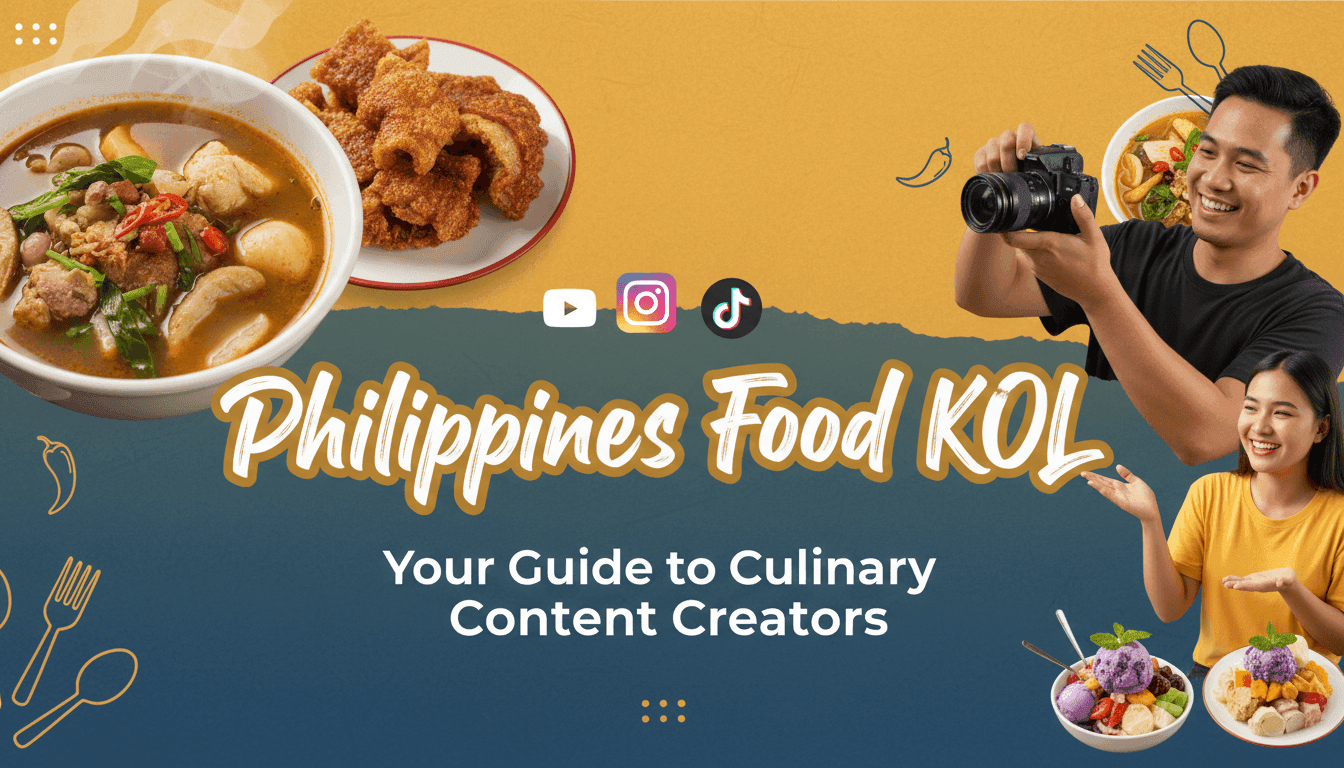
Table Of Contents
- The Rise of Food KOLs in the Philippines
- What Makes Filipino Culinary Content Creators Unique
- Types of Food KOLs in the Philippines
- Key Platforms Where Filipino Food KOLs Thrive
- What Brands Should Look for in a Philippines Food KOL
- How to Find and Vet the Right Food KOL in the Philippines
- Why AI-Powered Discovery Changes the Game
- Conclusion
Philippines Food KOL: Your Guide to Culinary Content Creators
Food is not just sustenance in the Philippines — it is culture, community, and identity wrapped into every dish. From the smoky street-side isaw stalls of Manila to the pristine white sand resorts of Palawan serving fresh kinilaw, food sits at the absolute center of Filipino life. And in the age of social media, that passion has given rise to a vibrant, highly engaged community of Philippines food KOLs (Key Opinion Leaders) who are reshaping how millions of Filipinos discover, share, and experience food every single day.
For brands in the food and beverage space, hospitality, or consumer goods, tapping into this creator ecosystem is no longer optional — it is one of the highest-ROI marketing channels available in Southeast Asia. But finding the right culinary content creator, someone whose audience, aesthetic, and values genuinely align with your brand, is far more nuanced than scrolling through hashtags. This guide breaks down everything you need to know about the Philippines food KOL landscape: who they are, where they create, what makes them powerful, and how cutting-edge AI tools are making the discovery process smarter than ever.
The Rise of Food KOLs in the Philippines {#rise-of-food-kols}
The Philippines has one of the highest social media usage rates in the world, consistently ranking among the top countries for time spent on platforms like TikTok, Facebook, YouTube, and Instagram. Within that broader social media culture, food content has emerged as one of the most consumed and shared categories. Filipino audiences are deeply passionate about discovering new restaurants, recreating traditional recipes, and watching creators explore regional cuisine across 7,000-plus islands.
This passion translated naturally into a thriving KOL economy. Over the past five years, a new generation of food content creators in the Philippines has grown massive, loyal followings by combining storytelling, authentic food reviews, recipe tutorials, and lifestyle content. Unlike celebrity endorsers of the past, these creators are perceived as peers — trusted voices who eat where their audience eats, cook what their audience cooks, and share honest opinions without a polished corporate filter. That authenticity is precisely what makes them so effective for brands.
The market has also matured significantly. What started as food bloggers sharing reviews on personal websites has evolved into a multi-platform creator economy where food KOLs produce cinematic short-form videos, long-form cooking shows, live-stream market tours, and even their own merchandise and recipe books. Brands that once dismissed influencer marketing as a short-term trend are now building long-term creator partnerships as core pillars of their marketing strategy.
What Makes Filipino Culinary Content Creators Unique {#what-makes-filipino-creators-unique}
Filipino food KOLs occupy a distinctive space in the broader Southeast Asian creator landscape, and understanding what sets them apart is essential for any brand looking to run an authentic campaign.
Cultural storytelling runs deep. Filipino food is inseparable from family, memory, and regional identity. Creators who cover Kapampangan cuisine, Visayan seafood traditions, or the Ilocano food belt bring their audience into a rich cultural narrative, not just a recipe. This storytelling depth drives unusually high engagement because followers feel emotionally connected to the content.
Humor and warmth are defining tones. Filipino content culture prizes pagkamapagmahal (warmth) and humor. The most successful food KOLs in the Philippines do not take themselves too seriously. They react with genuine excitement, joke with their audience in Taglish (the natural mix of Tagalog and English), and create a sense of shared experience that makes their content feel like dining with a friend rather than watching an advertisement.
Value consciousness resonates powerfully. Many top Filipino food creators built their audiences by finding the best-value meals, from affordable tapsilog joints to budget-friendly hidden gems in unexpected neighborhoods. This value-focused lens means their audience trusts their recommendations not just for taste, but for practical relevance to everyday Filipino life.
Regional diversity creates niche depth. With regional cuisines as distinct as the regions themselves, there is no single monolithic Filipino food audience. Creators who specialize in Bicol's spicy laing, Davao's exotic fruits, or Pampanga's legendary lechon speak to highly specific, deeply loyal regional communities.
Types of Food KOLs in the Philippines {#types-of-food-kols}
Not all food KOLs are created equal, and choosing the right type for your campaign matters as much as choosing the right individual creator.
Mega food influencers typically have over 1 million followers and command national brand awareness campaigns. They often span multiple content categories, with food being one pillar alongside travel and lifestyle. Their reach is unmatched, but their audience connection can be broader and less niche-specific.
Macro food creators (100,000 to 1 million followers) represent the sweet spot for many brands. They have established credibility, professional-quality content production, and a loyal core audience that actively trusts their recommendations. These creators are often the backbone of product launch campaigns, restaurant openings, and food brand partnerships.
Micro food KOLs (10,000 to 100,000 followers) are arguably the most powerful for targeted campaigns. Their engagement rates frequently outperform larger creators, their audiences are highly specific (a micro creator focused solely on Cebu's lechon scene will have an intensely loyal Visayan following), and their partnership costs are significantly lower. For regional activations, new product sampling, or community-driven campaigns, micro food KOLs often deliver exceptional ROI.
Nano creators and food community builders (under 10,000 followers) should not be overlooked, especially for hyper-local campaigns or community-seeding strategies. These creators maintain extremely personal relationships with their followers and generate word-of-mouth credibility that money cannot easily manufacture.
Key Platforms Where Filipino Food KOLs Thrive {#key-platforms}
Understanding where Filipino food creators are most active helps brands allocate budget and creative strategy effectively.
- TikTok has become the dominant platform for food discovery in the Philippines, particularly among audiences aged 18 to 35. Short-form food videos with ASMR sounds, quick recipe demos, and restaurant review formats regularly go viral and drive immediate foot traffic or purchase behavior.
- YouTube remains the home for long-form culinary content: full cooking tutorials, food travel vlogs, and episodic restaurant-hopping series. Filipino audiences on YouTube invest significant time with creators they trust, making it ideal for deeper brand storytelling.
- Instagram continues to be the platform of record for food aesthetics and aspirational dining content. Food KOLs use Reels for discovery and the feed for brand partnerships that require polished, high-production visuals.
- Facebook still commands massive reach in the Philippines, particularly for audiences above 35. Food groups and pages on Facebook generate enormous organic engagement and should not be dismissed despite the platform's reduced influencer marketing cachet globally.
- YouTube Shorts and Instagram Reels are increasingly important cross-posting channels as creators maximize their content across multiple short-form video surfaces.
For brands working across multiple regions or exploring emerging Southeast Asian markets, platforms like Xiaohongshu are also worth considering as Filipino food content begins to gain traction among Chinese-speaking diaspora audiences.
What Brands Should Look for in a Philippines Food KOL {#what-brands-should-look-for}
Choosing a food KOL based on follower count alone is a recipe for wasted budget. Savvy brands evaluate creators across several dimensions before committing to a partnership.
Audience authenticity should always be the first filter. Fake followers, purchased engagement, and bot-inflated metrics remain a problem across every market, including the Philippines. Before signing any creator, verify that their engagement rate is consistent with their follower count, that their comment sections reflect genuine human conversation, and that their audience demographics match your target customer profile.
Content quality and consistency matter enormously for brand safety. Review a creator's last 30 to 60 days of posts. Are they publishing consistently? Is the production quality stable? Do their values and content themes align with your brand's positioning? A food KOL who frequently posts about budget street food may not be the right fit for a premium restaurant group, regardless of their follower count.
Niche alignment goes beyond just "food." A creator who specializes in Filipino home cooking recipes and a creator who focuses on high-end Manila restaurant reviews may both be "food KOLs," but their audiences have dramatically different expectations, budgets, and purchase behaviors.
Past partnership performance is one of the strongest predictors of campaign success. If a creator has worked with food and beverage brands before, look at how those collaborations were received by their audience. Transparent, well-integrated partnerships that feel authentic to the creator's voice consistently outperform forced promotions.
How to Find and Vet the Right Food KOL in the Philippines {#how-to-find-and-vet}
Manually searching for food KOLs across TikTok, Instagram, and YouTube is time-consuming, imprecise, and often misses the most relevant creators. The traditional approach of relying on static influencer databases is equally problematic — those lists go stale quickly and rarely capture emerging creators or niche specialists.
A more effective approach combines platform-native research with structured vetting criteria:
- Define your campaign goals first — reach, engagement, conversion, regional penetration — before identifying creators. Your goals should dictate the tier and type of KOL you pursue.
- Search with specificity — use niche hashtags like #Filipinofoodreview, #ManilaeATS, #CebuFood, #PinoyRecipes, and regional variants to surface creators whose content is genuinely relevant rather than tangentially food-adjacent.
- Audit engagement quality — look beyond likes and views to comment sentiment, share behavior, and save rates. For recipe content, saves are a particularly strong signal of genuine audience interest.
- Request media kits and past collaboration data — established creators will have audience demographic breakdowns, average reach per post, and case studies from previous brand partnerships.
- Run a small pilot campaign before committing to long-term deals, especially with newer or less-tested creators.
For brands running ongoing influencer programs or managing campaigns across multiple product lines, manual discovery at this level quickly becomes unsustainable. This is where purpose-built influencer marketing platforms and AI-powered discovery tools become genuinely transformative.
Why AI-Powered Discovery Changes the Game {#why-ai-powered-discovery}
The Philippines food KOL landscape is vast, fast-moving, and constantly evolving. New creators break through every month. Established creators pivot their content focus. Audience demographics shift as platforms introduce new features. A static database approach cannot keep pace with this dynamism — and that is exactly the problem that AI-powered influencer discovery tools were built to solve.
StarScout AI operates as an always-on social media agent that scans Instagram, TikTok, YouTube, and other major platforms in real time. Rather than forcing marketers to manually input rigid search filters, StarScout understands campaign briefs written in plain English. A brand can describe what they need — "food KOLs in the Philippines focused on home cooking who have a warm, family-friendly tone and audiences in the 25-40 age bracket" — and the AI translates that brief into precise discovery criteria, surfacing creators whose content quality, audience engagement patterns, and brand values genuinely match the marketer's goals.
This matters enormously for the food vertical in the Philippines because the nuance required to distinguish between a Luzon-focused street food reviewer, a Mindanao regional cuisine specialist, and a high-end Manila dining critic is exactly the kind of contextual intelligence that AI handles far better than keyword-based database searches. The result is a dramatically shorter path from campaign brief to qualified creator shortlist, with significantly less manual research and guesswork along the way.
Brands working with influencer marketing agencies or building in-house programs can use AI discovery tools to run comprehensive creator audits, identify emerging micro-influencers before they peak in price, and maintain ongoing visibility into the creator landscape without dedicating full-time headcount to the research process. Combined with broader AI marketing services and content marketing strategies, an AI-first approach to food KOL discovery positions brands to move faster, spend smarter, and build more authentic creator partnerships in one of Southeast Asia's most engaged social media markets.
Conclusion
The Philippines food KOL ecosystem is one of the most dynamic and culturally rich in all of Southeast Asia. Filipino culinary content creators bring an unmatched combination of storytelling depth, authentic audience connection, and regional diversity that makes them genuinely powerful partners for brands looking to drive awareness, trust, and conversion in the Filipino market. But the opportunity is only as good as your ability to identify, vet, and activate the right creators at the right time.
Whether you are launching a new food product, opening a restaurant, or building long-term brand equity in the Philippines, the path to success runs through smart KOL strategy. That means moving beyond follower counts, understanding platform dynamics, and leveraging the best available tools to find creators whose audiences are your customers. In a market this fast-moving, real-time AI-powered discovery is not just a convenience — it is a genuine competitive advantage.
Ready to Find Your Perfect Philippines Food KOL?
Stop guessing and start discovering. StarScout AI scans TikTok, Instagram, YouTube, and more in real time to surface the exact food content creators your brand needs — all from a simple plain-English brief. No static databases. No outdated lists. Just precise, AI-powered influencer discovery built for the way modern marketing actually works.