
Organic Food KOL: Finding the Right Natural & Healthy Eating Opinion Leaders for Your Brand
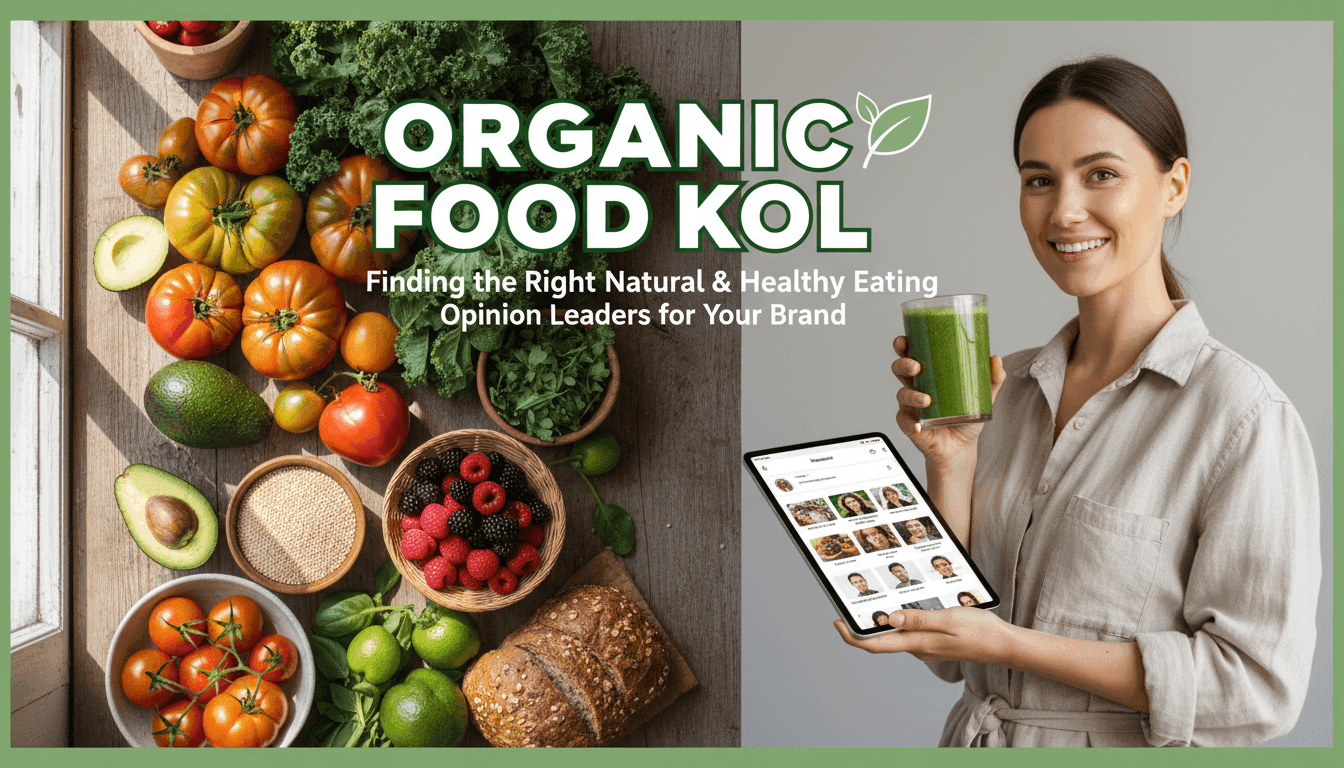
Table Of Contents
- What Is an Organic Food KOL?
- Why Organic Food KOLs Matter for Your Brand
- Types of Organic Food Opinion Leaders
- Key Platforms Where Organic Food KOLs Thrive
- How to Identify Authentic Organic Food KOLs
- Using AI to Discover the Perfect Organic Food Influencers
- Best Practices for Partnering with Natural Food Opinion Leaders
- Measuring Success with Organic Food KOL Campaigns
The organic food market has exploded in recent years, with consumers increasingly seeking guidance from trusted voices about what to eat, where to shop, and how to live healthier lives. These trusted voices are organic food Key Opinion Leaders (KOLs), influencers who have built dedicated audiences around natural eating, sustainable agriculture, and wellness lifestyles. Unlike traditional celebrity endorsements, organic food KOLs connect with their followers through authentic experiences, detailed product reviews, and educational content that genuinely influences purchasing decisions.
For brands in the natural food, organic agriculture, and health supplement spaces, partnering with the right KOLs can be transformative. However, the challenge lies in identifying opinion leaders whose values truly align with your brand, whose audiences match your target demographics, and whose engagement rates indicate genuine influence rather than inflated follower counts. This comprehensive guide explores what makes organic food KOLs effective, where to find them across different platforms, and how modern AI-powered tools are revolutionizing the discovery process to help brands connect with authentic voices in the natural eating movement.
Finding the Perfect Organic Food KOL
5 critical insights for partnering with authentic natural eating influencers
Authenticity Over Reach
Engaged micro-communities outperform large, disengaged audiences
Values Alignment
Shared commitment to sustainability builds trust and credibility
5 Types of Organic Food KOLs
Nutritionists
Evidence-based health professionals
Plant-Based
Vegan lifestyle advocates
Homesteaders
Farm-to-table creators
Wellness
Holistic lifestyle influencers
Activists
Food transparency educators
Where to Find Organic Food KOLs
Visual storytelling & community building
TikTok
Quick tips & viral educational content
YouTube
Long-form tutorials & evergreen content
Xiaohongshu
Chinese market product reviews & e-commerce
Typical Instagram engagement rate
Micro-influencer engagement rates
Content consistency matters
Values over vanity metrics
Creative freedom drives results
What Is an Organic Food KOL?
An organic food KOL (Key Opinion Leader) is an influencer who has established credibility and authority in the natural and healthy eating space. These content creators educate their audiences about organic produce, clean eating practices, sustainable food systems, and holistic wellness approaches. What distinguishes KOLs from general influencers is their depth of expertise and the trust they've cultivated within their communities.
Organic food KOLs typically share several defining characteristics. They consistently create content focused on natural eating lifestyles, whether through recipe development, grocery hauls, farm visits, or nutritional education. Their audiences actively seek their opinions before making food purchasing decisions, viewing them as knowledgeable guides rather than mere entertainers. Most importantly, authentic organic food KOLs practice what they preach, integrating natural eating into their daily lives in ways their followers can observe and emulate.
The influence of these opinion leaders extends beyond simple product recommendations. They shape conversations around food transparency, agricultural practices, label reading, and the broader implications of dietary choices on personal health and environmental sustainability. For brands, this means partnerships with organic food KOLs can drive not just immediate sales but long-term brand loyalty and community building.
Why Organic Food KOLs Matter for Your Brand
The organic food industry faces unique marketing challenges that make KOL partnerships particularly valuable. Consumers in this space are typically more skeptical of traditional advertising, more research-oriented, and more invested in understanding the story behind their food. Organic food KOLs bridge the trust gap that conventional marketing struggles to cross.
Research consistently shows that consumers trust peer recommendations and expert opinions significantly more than brand messaging when it comes to health and wellness products. When an organic food KOL with 50,000 engaged followers recommends your sprouted grain bread or cold-pressed juice, their endorsement carries the weight of personal testimony combined with perceived expertise. This social proof becomes especially powerful in categories where consumers feel overwhelmed by choices and uncertain about claims.
Beyond trust, organic food KOLs provide brands with several strategic advantages:
- Targeted reach: KOLs have already assembled audiences specifically interested in natural eating, eliminating the waste inherent in broad-spectrum advertising
- Content creation: Opinion leaders produce authentic, platform-optimized content that brands can repurpose across channels
- Education delivery: Complex topics like regenerative agriculture or nutrient bioavailability become accessible when explained by trusted KOLs
- Community access: Partnerships open doors to engaged communities where conversations happen and purchasing decisions are influenced
- Platform diversity: Effective KOLs maintain presences across multiple platforms, extending campaign reach organically
For emerging organic brands competing against established natural food companies, KOL partnerships offer a cost-effective path to building awareness and credibility quickly. An AI-powered influencer discovery approach can help identify these opportunities efficiently, scanning multiple platforms simultaneously to find KOLs whose audiences perfectly match your ideal customer profile.
Types of Organic Food Opinion Leaders
The organic food KOL landscape is remarkably diverse, with different creator types appealing to distinct audience segments. Understanding these categories helps brands identify which opinion leaders best align with their specific products and marketing objectives.
Nutritionists and Dietitians
Credentialed health professionals who create content around evidence-based nutrition represent the most authoritative segment of organic food KOLs. These creators typically hold degrees in nutrition science, dietetics, or related fields, and their content balances scientific accuracy with practical application. Their audiences tend to be health-conscious consumers seeking reliable information rather than trends. Partnerships with this KOL type work especially well for brands making specific health claims or targeting consumers managing particular dietary needs.
Plant-Based Lifestyle Advocates
This category encompasses vegan and vegetarian influencers who focus on plant-forward eating patterns. Their content often combines recipe creation, restaurant reviews, product testing, and advocacy for animal welfare and environmental sustainability. Plant-based KOLs typically attract younger, values-driven audiences who make purchasing decisions based on ethical considerations alongside health benefits. Brands offering plant-based proteins, dairy alternatives, or vegan-certified products find particular success with these opinion leaders.
Homesteaders and Farm-to-Table Creators
KOLs in this category document their experiences growing food, raising animals, preserving harvests, and living more self-sufficiently. Their content provides aspirational lifestyle imagery combined with practical skills education. These creators attract audiences interested in food origins, agricultural practices, and reconnecting with traditional food preparation methods. They're ideal partners for brands emphasizing local sourcing, regenerative agriculture, or artisanal production methods.
Clean Eating and Wellness Influencers
This broad category includes lifestyle creators who position organic food within larger wellness narratives encompassing fitness, mental health, beauty, and holistic living. Their audiences typically consist of people beginning their natural eating journeys rather than committed organic consumers. These KOLs excel at introducing mainstream audiences to organic products in accessible, non-intimidating ways, making them valuable for brands seeking to expand beyond core natural food consumers.
Food Transparency Activists
A smaller but highly influential category focuses on educating audiences about food industry practices, label interpretation, ingredient sourcing, and corporate accountability. These KOLs often take investigative approaches, comparing products, analyzing ingredient lists, and calling out misleading marketing. While partnerships require careful navigation, these opinion leaders command tremendous trust and can significantly impact consumer perceptions within the organic food community.
Identifying which KOL type best serves your brand objectives requires understanding not just follower counts but audience composition, content style, and values alignment. Modern influencer marketing platforms provide the analytical depth needed to make these distinctions accurately.
Key Platforms Where Organic Food KOLs Thrive
Organic food KOLs maintain presences across multiple social platforms, but their content strategies and audience demographics vary significantly by channel. Effective brand partnerships require understanding these platform-specific dynamics.
Instagram: Visual Storytelling and Community Building
Instagram remains the dominant platform for organic food content, with its visual focus perfectly suited to beautiful food photography, recipe showcases, and lifestyle imagery. Organic food KOLs use Instagram's diverse content formats strategically. Feed posts establish aesthetic consistency and showcase finished dishes or products. Stories provide behind-the-scenes access, shopping trips, and real-time engagement. Reels capture recipe tutorials and quick tips that benefit from algorithmic promotion. The platform's shopping features also enable direct product discovery and purchase, shortening the path from recommendation to transaction.
Instagram audiences for organic food content tend to be predominantly female, aged 25-44, with above-average incomes and education levels. Engagement rates remain relatively strong compared to other platforms, particularly when KOLs actively cultivate community through consistent interaction and authentic storytelling.
TikTok: Education Through Entertainment
TikTok has rapidly emerged as a powerhouse for organic food content, particularly for reaching younger audiences and creating viral moments. The platform's algorithm favors entertaining, educational content regardless of follower count, allowing emerging KOLs to build influence quickly. Successful organic food creators on TikTok blend quick recipes, myth-busting nutritional information, grocery shopping guides, and participatory challenges.
The platform's demographic skews younger than Instagram, with significant reach among Gen Z and younger Millennials who are forming their eating habits and values. Brands targeting these audiences or seeking to create cultural momentum around products find TikTok KOL partnerships particularly effective. The platform's video format also enables more detailed product demonstrations and authentic testimonials than static imagery allows.
YouTube: Deep-Dive Content and Long-Term Value
YouTube serves as the platform for comprehensive, evergreen content that continues generating value long after publication. Organic food KOLs use YouTube for detailed recipe tutorials, product comparison reviews, educational series about nutrition science, and documentary-style content about food systems. The platform's search functionality means well-optimized content continues attracting viewers months or years after creation, providing sustained brand exposure.
YouTube audiences for organic food content demonstrate high intent and engagement, often spending 10-30 minutes per video. This extended attention creates opportunities for thorough product integration and storytelling that builds genuine interest rather than fleeting awareness. KOL partnerships on YouTube typically involve more substantial collaborations like dedicated product reviews or sponsored series rather than brief mentions.
Xiaohongshu: Reaching Chinese Natural Food Consumers
For brands targeting Chinese markets or Chinese consumers globally, Xiaohongshu (Little Red Book) represents a critical platform where organic food KOLs share detailed product reviews, purchasing guides, and lifestyle content. The platform's e-commerce integration and review-focused culture make it particularly effective for driving purchasing decisions around imported organic products and natural food brands.
Xiaohongshu's user base consists primarily of young, urban, affluent Chinese women actively seeking trusted recommendations for premium products including organic and imported foods. KOLs on this platform blend aspirational lifestyle content with practical shopping advice, often including specific purchasing links and price comparisons. The platform's unique position between social media and e-commerce makes conversions highly measurable.
Cross-Platform Strategies
The most influential organic food KOLs maintain coordinated presences across multiple platforms, adapting content for each channel's strengths while maintaining consistent messaging. An AI influencer discovery system can scan across Instagram, TikTok, YouTube, Xiaohongshu, and other networks simultaneously, identifying creators whose multi-platform strategies align with your campaign objectives and whose audiences demonstrate genuine engagement regardless of where they connect.
How to Identify Authentic Organic Food KOLs
The organic food space attracts both genuine advocates and opportunistic creators seeking to capitalize on trending topics. Distinguishing authentic opinion leaders from superficial influencers requires evaluating multiple factors beyond follower counts and basic engagement metrics.
Content Consistency and Depth
Authentic organic food KOLs demonstrate sustained commitment to natural eating topics rather than occasional posts inserted among unrelated content. Review several months of their content to assess whether organic food represents a genuine focus or opportunistic trend-chasing. Look for depth of knowledge in their discussions, whether they cite sources for nutritional claims, and how they handle complex or controversial topics within the organic food community.
Genuine opinion leaders also maintain consistent values across their content. If a KOL promotes organic eating while simultaneously partnering with conventional food brands or products containing ingredients they've criticized, this suggests financial motivations outweigh authentic advocacy. Values consistency matters tremendously to organic food audiences, who will quickly identify and reject perceived hypocrisy.
Audience Quality Over Quantity
A smaller, engaged community of genuine organic food enthusiasts provides more value than a large, disengaged follower base. Examine comment sections to assess whether followers ask meaningful questions, share their experiences, and engage in substantive discussions. Authentic KOLs typically respond to comments personally, fostering two-way conversations rather than broadcasting to passive audiences.
Beware of sudden follower spikes, disproportionately high follower counts relative to engagement, and generic comments that suggest bot activity. Modern influencer marketing platforms employ sophisticated fraud detection to identify fake followers, engagement pods, and other artificial inflation tactics that undermine campaign effectiveness.
Transparent Partnership Practices
How KOLs handle sponsored content reveals much about their authenticity and audience trust. Genuine opinion leaders clearly disclose partnerships, maintain editorial independence even in sponsored content, and decline collaborations with brands that don't align with their values. They recognize that audience trust represents their most valuable asset and protect it accordingly.
Review how previous brand partnerships appeared in their content. Did the KOL integrate products naturally into content they'd typically create, or did sponsored posts feel forced and inconsistent with their usual style? Did they provide honest assessments including both strengths and limitations, or purely promotional messaging? Audiences of authentic organic food KOLs expect critical thinking even in paid partnerships.
Platform-Appropriate Metrics
Different platforms require different metric interpretations. On Instagram, engagement rates between 2-5% are typical for accounts with substantial followings, while micro-influencers often achieve 5-10%. TikTok's algorithm can drive much higher engagement rates for viral content, but consistency matters more than individual peaks. YouTube success appears in watch time and completion rates rather than simple view counts. Evaluate metrics within platform-specific contexts rather than applying universal benchmarks.
Advanced analytics should also examine audience demographics to confirm alignment with your target customers. An organic food KOL might have impressive engagement, but if their audience consists primarily of teenage users rather than the 30-45-year-old parents you're targeting, the partnership won't deliver desired results regardless of engagement rates.
Using AI to Discover the Perfect Organic Food Influencers
Traditional influencer discovery methods involve manual searching, spreadsheet tracking, and time-consuming vetting processes that limit the scope of possibilities marketers can realistically consider. Modern AI-powered platforms transform this process by automating discovery across multiple platforms simultaneously while applying sophisticated filtering that traditional databases can't match.
StarScout AI represents this evolution in influencer discovery, functioning as an always-on social media agent that understands marketing briefs in plain English and translates them into precise search criteria. Rather than limiting searches to static databases that quickly become outdated, AI engines scan Instagram, TikTok, YouTube, X, Xiaohongshu, and other networks in real-time to surface creators whose content quality, audience engagement, and brand values align with specific campaign goals.
For organic food brands, this AI-powered approach solves several critical challenges. You can describe your ideal KOL in natural language, such as "plant-based nutritionists with engaged audiences in the Pacific Northwest who focus on sustainable agriculture and have authentic partnerships with small organic brands," and the AI translates these complex, multi-dimensional requirements into actionable search parameters. The system then evaluates thousands of potential creators across platforms, applying fraud detection, audience analysis, and content assessment at a scale impossible through manual methods.
The advantages extend beyond initial discovery. AI systems can monitor KOL performance over time, alerting you to emerging voices before they become oversaturated with partnerships or identifying declining engagement that might affect campaign performance. They can also analyze successful competitors' KOL strategies, revealing partnership opportunities you might have overlooked and providing benchmarks for your own campaigns.
Integrating AI discovery with comprehensive influencer marketing services creates a complete solution from identification through campaign execution and measurement. This combination of technological efficiency and strategic expertise enables brands to move quickly on opportunities while maintaining the relationship management and creative collaboration that successful KOL partnerships require.
Best Practices for Partnering with Natural Food Opinion Leaders
Successful organic food KOL partnerships require approaching influencers as collaborative partners rather than advertising channels. These opinion leaders have cultivated audience trust through authenticity, and they'll protect that trust by maintaining editorial independence and values alignment even within paid partnerships.
Lead with Values Alignment
When reaching out to organic food KOLs, emphasize why your brand and their platform share common values rather than immediately discussing promotional opportunities. Demonstrate familiarity with their content, reference specific posts that resonated with your brand's mission, and explain how a partnership could provide genuine value to their audience. KOLs who are passionate about organic food and wellness prioritize partnerships that feel natural and beneficial to their communities rather than purely transactional arrangements.
Be prepared to share detailed information about your sourcing practices, ingredient quality, certifications, and company values. Authentic organic food KOLs often conduct their own research before agreeing to partnerships, and they appreciate brands that proactively provide transparency.
Allow Creative Freedom
KOLs know their audiences far better than brands do, understanding what content formats resonate, what tone feels authentic, and how to integrate products naturally into their narratives. Provide clear information about your product's key features and benefits, but resist the temptation to script content or demand specific messaging. The most effective sponsored content feels indistinguishable from the KOL's organic posts, and that only happens when creators maintain their authentic voice and approach.
Establish clear partnership parameters, such as required disclosures, prohibited claims, and campaign timing, while leaving creative execution to the influencer. Review content before publication to ensure accuracy and brand safety, but approach this as collaborative refinement rather than heavy-handed editing that undermines the KOL's authentic expression.
Structure Win-Win Compensation
Compensation structures should reflect the value KOLs provide while acknowledging that different creator tiers have different rate expectations. Micro-influencers with 10,000-50,000 followers might work for product exchanges or modest flat fees, while established opinion leaders command substantial compensation reflecting their influence and content creation expertise.
Consider compensation structures that align incentives, such as performance bonuses tied to engagement rates or sales conversions, affiliate arrangements that provide ongoing revenue for KOLs who continue promoting products authentically, or long-term ambassador programs that deepen relationships beyond one-off posts. Many organic food KOLs prefer ongoing partnerships with brands they genuinely use rather than transactional single-post arrangements.
Facilitate Genuine Product Experience
Authentic endorsements require authentic experiences. Provide KOLs with sufficient product quantities and time to genuinely integrate items into their routines before creating content. Send supporting information about sourcing, production methods, and nutritional details that KOLs can reference when discussing products with their audiences. If applicable, offer farm visits, facility tours, or meetings with founders that create deeper connections and more compelling storytelling opportunities.
Encourage honest feedback even in sponsored content. KOLs who share both strengths and minor limitations appear more credible than those offering unrealistic praise. Audiences appreciate balanced perspectives and are more likely to trust recommendations that acknowledge products work particularly well for specific uses or preferences rather than claiming universal perfection.
Measure Beyond Vanity Metrics
Evaluate KOL partnerships based on meaningful business outcomes rather than superficial metrics like impressions or likes. Track website traffic from influencer content, monitor conversion rates for influencer-specific discount codes, assess changes in brand awareness or sentiment within target demographics, and measure sustained interest through metrics like email list growth or social following increases.
Advanced content marketing analytics can connect KOL campaigns to longer-term brand building objectives, demonstrating how influencer partnerships contribute to market positioning and customer lifetime value rather than just immediate transactions.
Measuring Success with Organic Food KOL Campaigns
Effective measurement begins with clearly defined objectives that extend beyond simple awareness. Different campaign goals require different metrics and evaluation approaches.
For product launch campaigns, track immediate response metrics including click-through rates from KOL content to your website, use of campaign-specific discount codes, and direct sales attribution. Monitor social listening for increases in brand mentions, sentiment changes, and conversation topics that indicate the KOL successfully introduced your product to new audiences.
For brand building objectives, evaluate metrics that indicate perception shifts such as follower growth on your owned channels, increases in organic branded search volume, improvements in brand awareness or consideration surveys, and quality of earned media coverage that follows successful KOL campaigns. These longer-term indicators often matter more than immediate sales, particularly for emerging brands establishing market presence.
For community building goals, assess engagement with your owned content following KOL partnerships, participation in brand-created conversations or hashtags, user-generated content volume and quality, and development of brand advocates within your social communities. These community health indicators predict sustained success better than transactional metrics.
Advanced analytics should also examine audience overlap between KOLs and your owned channels, identifying opportunities to reach genuinely new audiences rather than repeatedly messaging the same consumers. Platform-specific tools combined with comprehensive AI marketing services can reveal these insights and optimize future partnership selections based on incremental reach rather than absolute audience size.
Finally, maintain relationships with successful KOL partners beyond individual campaigns. Influencers who have positively experienced your brand, products, and partnership approach become ongoing advocates who provide compounding value through authentic mentions, organic recommendations, and willingness to participate in future campaigns. These sustained relationships often deliver more value than any single sponsored post could achieve.
Organic food KOLs represent powerful partners for brands seeking to connect with health-conscious, values-driven consumers who increasingly rely on trusted opinion leaders to navigate the complex natural food marketplace. The most effective partnerships combine authentic values alignment, creative collaboration, and strategic platform selection with sophisticated discovery methods that identify genuinely influential voices rather than superficial metrics.
As the organic food market continues expanding and diversifying, the KOL landscape will grow increasingly specialized, with opinion leaders emerging in specific niches from fermentation and gut health to regenerative agriculture and plant-based athletics. Brands that establish authentic partnerships now, built on mutual respect and shared values rather than purely transactional arrangements, position themselves for sustained success as these communities mature and expand.
The evolution from manual influencer databases to AI-powered real-time discovery fundamentally transforms what's possible in KOL marketing. Brands can now identify perfect-fit opinion leaders across multiple platforms simultaneously, assess authenticity and audience quality at scale, and move quickly on partnership opportunities before competitors recognize the same potential. This technological advantage, combined with strategic expertise in relationship building and campaign execution, enables organic food brands of all sizes to compete effectively for consumer attention and loyalty in an increasingly crowded marketplace.
Ready to Discover Your Perfect Organic Food KOLs?
Stop manually searching through influencer databases and start discovering authentic organic food opinion leaders in real-time across Instagram, TikTok, YouTube, Xiaohongshu, and more. StarScout AI uses advanced AI to understand your brand requirements in plain English and surface creators whose content quality, audience engagement, and values genuinely align with your marketing goals.
Experience the future of influencer discovery with AI-powered precision that transforms how natural food brands connect with the voices their customers trust. Start discovering your ideal organic food KOLs today.