
Mexico Food KOL: Culinary Opinion Leaders & Restaurant Marketing Success
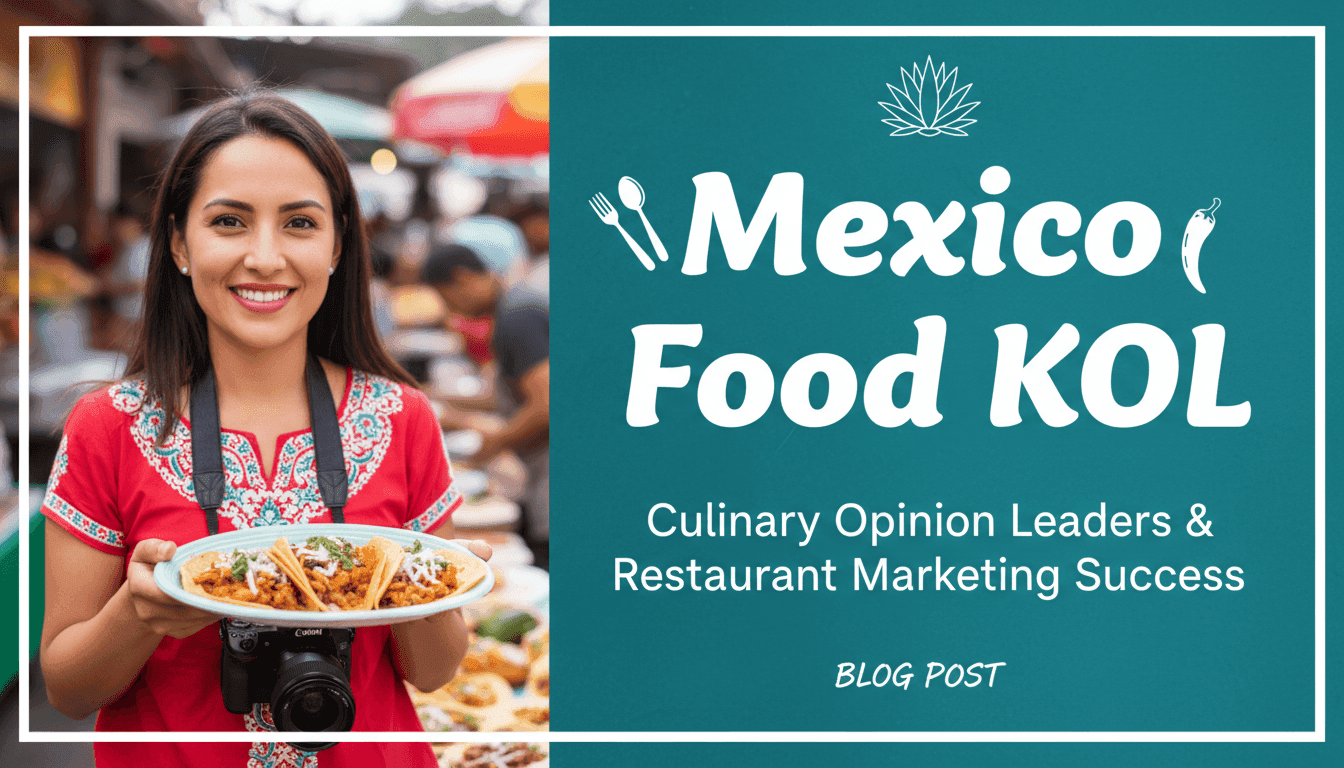
Table Of Contents
- Understanding Mexico's Food KOL Landscape
- Why Food KOLs Matter for Restaurant Marketing
- Types of Mexican Culinary Opinion Leaders
- How to Identify the Right Food KOLs for Your Restaurant
- Key Metrics for Evaluating Food Influencers
- Building Successful Restaurant Partnerships with KOLs
- Platform Strategies for Mexican Food Content
- Common Mistakes in Food KOL Marketing
- The Future of Restaurant Influencer Marketing in Mexico
Mexico's culinary scene has exploded across social media platforms, transforming how restaurants connect with diners and how food lovers discover their next memorable meal. From street taco vendors in Mexico City to upscale coastal seafood establishments in Baja California, food Key Opinion Leaders (KOLs) have become the bridge between culinary businesses and hungry audiences.
Unlike traditional food critics who operate behind editorial walls, today's Mexican food KOLs build authentic relationships with millions of followers who trust their recommendations, seek their opinions, and follow their culinary adventures across platforms like Instagram, TikTok, YouTube, and increasingly, international networks. These culinary opinion leaders don't just post pretty food photos. They shape dining trends, drive foot traffic, influence menu decisions, and can make or break a restaurant's reputation in their local market.
For restaurant owners, chefs, and hospitality marketers in Mexico, understanding how to identify, evaluate, and partner with the right food KOLs has become essential to competitive success. This guide explores the Mexican food influencer ecosystem, reveals what separates genuine culinary opinion leaders from vanity metrics, and provides actionable strategies for building influencer partnerships that deliver measurable business results.
Understanding Mexico's Food KOL Landscape {#understanding-mexicos-food-kol-landscape}
Mexico's food KOL ecosystem reflects the country's rich culinary heritage combined with modern social media dynamics. The landscape encompasses food bloggers who've transitioned from written content to video-first platforms, professional chefs leveraging their expertise to build personal brands, home cooks sharing regional recipes passed down through generations, and food enthusiasts who've turned their passion into full-time content creation careers.
What makes Mexico's food influencer scene unique is its deep connection to cultural identity. Mexican cuisine represents far more than sustenance. It embodies regional pride, family traditions, indigenous ingredients, and centuries of culinary evolution. Food KOLs who understand this cultural context create content that resonates emotionally with audiences, making their restaurant recommendations particularly powerful.
The geographic diversity also shapes the influencer landscape. A food KOL in Guadalajara operates in a different culinary ecosystem than one in Cancún or Monterrey. Regional specialties, local ingredients, dining customs, and even preferred social platforms can vary significantly. Understanding these regional nuances becomes critical when selecting influencers for restaurant marketing campaigns.
Social media penetration in Mexico has reached impressive levels, with over 100 million active users across platforms. This digital engagement creates massive opportunities for restaurants to reach customers through influencer partnerships, but it also means increased competition for attention and higher expectations for content quality.
Why Food KOLs Matter for Restaurant Marketing {#why-food-kols-matter}
Traditional restaurant marketing channels have lost effectiveness as consumer behavior shifts decisively toward social discovery. Before visiting a new restaurant, the majority of diners now check social media for real customer experiences, authentic food photography, and trusted recommendations from influencers they follow.
Food KOLs provide what paid advertising cannot: genuine social proof. When a respected culinary opinion leader shares their positive experience at your restaurant, their followers perceive it as a personal recommendation from a trusted friend rather than a commercial message. This authenticity drives higher conversion rates and builds long-term brand equity.
The reach advantages are substantial. A single post from a well-connected food KOL can expose your restaurant to tens of thousands or even millions of potential customers within hours. For new restaurant openings, seasonal menu launches, or special events, this concentrated exposure can generate immediate business impact.
Beyond immediate traffic, food KOL partnerships contribute to sustained visibility. Quality influencer content continues delivering value long after publication, appearing in search results, getting shared by followers, and building your restaurant's digital footprint. This content compounds over time, creating ongoing marketing value from a single collaboration.
Food influencers also provide valuable customer insights. The comments, questions, and engagement on KOL content about your restaurant reveal what resonates with audiences, which dishes generate excitement, and what aspects of your dining experience customers value most. These insights inform menu development, service improvements, and future marketing strategies.
Types of Mexican Culinary Opinion Leaders {#types-of-culinary-opinion-leaders}
Understanding the different categories of food KOLs helps restaurants identify the right partners for their specific goals and target audiences.
Celebrity Chefs and Industry Professionals represent the traditional authority figures in Mexico's culinary world. These individuals have built credibility through formal training, restaurant ownership, television appearances, or cookbook publications. Their endorsements carry significant weight with audiences interested in culinary expertise and fine dining experiences. However, their partnership costs are typically higher, and their content may skew toward audiences with sophisticated palates rather than mainstream diners.
Regional Food Explorers focus on specific geographic areas, positioning themselves as local dining experts. These KOLs know their city's restaurant scene intimately, from hidden gems in residential neighborhoods to the latest downtown openings. For restaurants, partnering with regional explorers provides targeted exposure to local customers who are most likely to visit repeatedly. Their recommendations feel particularly trustworthy because followers view them as neighborhood insiders.
Street Food and Authentic Cuisine Advocates celebrate Mexico's rich tradition of accessible, everyday culinary excellence. These influencers spotlight taquerías, market stalls, fondas, and family-run establishments that serve traditional dishes. Their content emphasizes cultural authenticity, value, and the stories behind the food. Restaurants offering genuine regional cuisine or street-food-inspired menus find natural alignment with these KOLs.
Lifestyle Food Content Creators integrate food content within broader lifestyle narratives covering travel, fashion, wellness, or entertainment. Their restaurant features appear alongside other lifestyle content, reaching audiences interested in the complete dining experience rather than food alone. These partnerships work well for restaurants with distinctive atmospheres, Instagram-worthy design, or experiential dining concepts.
Video-First Creators have emerged as dominant forces on TikTok and YouTube, producing short-form content designed for maximum entertainment value. Their dynamic editing, trending audio, and engaging personalities capture attention from younger demographics. The viral potential of video content makes these partnerships particularly valuable for restaurants seeking rapid awareness growth.
How to Identify the Right Food KOLs for Your Restaurant {#identify-right-food-kols}
Selecting appropriate food KOLs requires moving beyond surface-level metrics like follower counts to evaluate factors that predict actual business results.
Start by defining your specific campaign objectives. Are you launching a new location and need immediate local awareness? Introducing a seasonal menu that showcases specific ingredients? Repositioning your brand to attract different customer segments? Building credibility with culinary enthusiasts? Each objective suggests different KOL characteristics and content approaches.
Audience alignment matters more than audience size. A food KOL with 500,000 followers delivers limited value if those followers live in different cities, represent wrong demographics, or engage with different cuisine types. Conversely, a micro-influencer with 15,000 highly engaged local followers who match your target customer profile can drive meaningful foot traffic. Look for KOLs whose audience demographics, geographic concentration, and interest patterns align closely with your ideal customers.
Content quality and aesthetic compatibility require careful evaluation. Review the KOL's recent restaurant content to assess photography skills, storytelling ability, production values, and overall aesthetic. Does their content style complement your restaurant's brand positioning? Would their followers appreciate your dining concept? Visual and narrative consistency between the influencer's existing content and your brand creates more authentic, effective partnerships.
Authenticity indicators separate genuine opinion leaders from transactional content producers. Examine whether the KOL's restaurant recommendations reflect thoughtful curation or appear to promote anyone willing to pay. Do they disclose sponsored content transparently? Do they engage authentically with follower comments and questions? Have they demonstrated knowledge of Mexican culinary traditions and ingredients? Authentic KOLs protect their credibility by maintaining selective partnerships, making their endorsements more valuable.
Traditional influencer discovery approaches involve manual platform searches, spreadsheet tracking, and static databases that quickly become outdated. This time-consuming process often misses emerging creators and fails to capture real-time audience dynamics. AI Influencer Discovery technology transforms this process by continuously scanning social platforms to identify creators whose content quality, audience engagement, and brand values align precisely with your restaurant's positioning. Instead of searching through influencer databases, marketers can describe their ideal partnership in plain language and receive data-driven recommendations based on current performance metrics.
Key Metrics for Evaluating Food Influencers {#key-metrics}
Measuring KOL effectiveness requires examining multiple dimensions beyond vanity metrics.
Engagement Rate reveals how actively an influencer's audience interacts with their content. Calculate this by dividing total engagement (likes, comments, shares, saves) by follower count. Food KOLs with engagement rates above 3-5% typically indicate genuine audience connection. Higher engagement suggests followers actually see, consume, and respond to the content rather than passively scrolling past.
Audience Quality determines whether followers represent real, active accounts or inflated numbers from bot purchases. Sudden follower spikes, suspiciously high follower-to-engagement ratios, generic comments, and audiences concentrated in unexpected countries all signal potential fraud. Legitimate food KOLs show steady, organic growth patterns and audiences concentrated in relevant geographic markets.
Content Consistency demonstrates the KOL's professionalism and reliability. Review posting frequency, content quality standards, and whether they maintain regular audience communication. Inconsistent posting patterns or dramatic quality variations suggest the influencer may not prioritize their content creation seriously enough to deliver strong campaign results.
Conversion Indicators provide the most direct evidence of business impact. Does the KOL's restaurant content generate visible follower responses like tagging friends, asking for location details, or expressing intent to visit? Do their stories and posts include features like location tags, reservation links, or menu highlights that facilitate customer action? Content that prompts these conversion behaviors delivers better marketing ROI.
Historical Performance with similar restaurants offers predictive insights. Have they featured comparable dining concepts previously? How did those posts perform relative to their average content? Did the restaurants report noticeable business impact? Food KOLs who've successfully promoted restaurants similar to yours represent lower-risk partnerships.
Cross-Platform Presence extends campaign reach and provides audience diversification. While some KOLs excel on single platforms, those maintaining strong engagement across multiple channels offer greater exposure opportunities. However, evaluate each platform's performance independently rather than assuming cross-platform followers represent entirely different audiences.
Building Successful Restaurant Partnerships with KOLs {#building-partnerships}
Effective food KOL collaborations require strategic planning, clear communication, and mutual value creation.
Begin partnership discussions by clearly articulating expectations, deliverables, timelines, and compensation structures. Ambiguity creates frustration and disappoints both parties. Specify exactly what content types you're requesting (posts, stories, reels, etc.), required elements (location tags, specific dishes, reservation information), approval processes, and usage rights. Equally important, be transparent about what you're offering in return, whether that's monetary compensation, complimentary dining experiences, or ongoing partnership opportunities.
Authenticity should guide every aspect of the collaboration. Allowing KOLs creative freedom within agreed parameters produces more genuine, engaging content than rigid scripting. Trust the influencer's understanding of what resonates with their audience while ensuring key messages and brand elements are communicated. The most effective food KOL content feels like natural recommendations rather than obvious advertisements.
Create memorable experiences that give KOLs compelling stories to share. Consider exclusive menu tastings, chef interactions, behind-the-scenes kitchen access, or special presentations that provide unique content opportunities. These experiential elements help your restaurant stand out from the many other dining establishments competing for influencer attention and create richer, more engaging social content.
Timing coordination maximizes campaign impact. Align KOL posts with your operational capacity, marketing initiatives, and seasonal opportunities. If multiple influencers are featuring your restaurant, stagger their content strategically to maintain sustained visibility rather than concentrating everything in a single day. Consider day-of-week and time-of-day factors that affect when target audiences are most receptive to dining content.
Relationship building extends beyond one-off transactions. The most valuable KOL partnerships develop over time as influencers become genuine advocates who feature your restaurant organically, provide honest feedback, and maintain ongoing dialogue. Nurture these relationships by staying engaged with their content, acknowledging their impact on your business, and prioritizing them for special opportunities.
Many restaurants benefit from comprehensive Influencer Marketing Agency expertise that handles strategy development, creator identification, negotiation, content coordination, and performance measurement. This professional support ensures campaigns maximize ROI while allowing restaurant teams to focus on operational excellence.
Platform Strategies for Mexican Food Content {#platform-strategies}
Each social platform offers distinct advantages for restaurant influencer marketing.
Instagram remains the dominant platform for food content in Mexico, with its visual-first format perfectly suited to showcasing beautifully plated dishes, restaurant atmospheres, and dining experiences. Instagram's features like Stories, Reels, location tags, and shopping integrations provide multiple ways for food KOLs to feature restaurants. The platform's older demographic skew (compared to TikTok) often translates to followers with higher disposable income for dining out. Focus Instagram partnerships on visually distinctive dishes, aesthetic dining spaces, and lifestyle-oriented content.
TikTok has exploded as a food discovery platform, particularly among younger Mexican audiences. The platform's algorithm favors content quality over follower counts, giving even new creators viral potential. TikTok food content tends toward entertainment, trending formats, and authentic, unpolished experiences rather than curated perfection. Restaurant features that showcase personality, behind-the-scenes moments, unique preparation methods, or participation in trending challenges perform exceptionally well. The platform's young user base makes it ideal for casual dining concepts, affordable options, and experiential offerings.
YouTube serves audiences seeking detailed culinary content, full restaurant reviews, and longer-form narratives. Food KOLs on YouTube typically produce more comprehensive restaurant features that explore menu variety, discuss value propositions, and provide thorough dining experience documentation. While YouTube content requires more production effort, it delivers longer shelf life and superior search engine visibility. The platform works particularly well for destination restaurants, unique concepts, and establishments wanting to communicate complex stories.
Facebook maintains relevance for local restaurant marketing, especially with older demographics. Community groups, event promotion, and local business discovery features make Facebook valuable for neighborhood establishments and regional chains. Food KOLs on Facebook often emphasize practical information like pricing, parking, family-friendliness, and value alongside food quality.
Xiaohongshu (Little Red Book) has gained traction among Chinese tourists and expats in Mexico, creating unique opportunities for restaurants in tourist-heavy areas or those offering Asian fusion concepts. The platform combines social commerce with content discovery, making it effective for reaching international visitors planning Mexican travel. Restaurants in Cancún, Los Cabos, Mexico City, and other tourist destinations should consider Xiaohongshu partnerships to capture this growing audience segment.
Platform selection should align with your target customers' social media behaviors, your restaurant's concept positioning, and the types of content that best showcase your offering. Multi-platform approaches maximize reach but require appropriate content adaptation for each platform's unique dynamics.
Common Mistakes in Food KOL Marketing {#common-mistakes}
Avoiding these frequent missteps improves campaign effectiveness and ROI.
Prioritizing Follower Counts Over Engagement leads restaurants to partner with influencers whose large audiences don't translate to business results. An influencer with 200,000 followers and 0.5% engagement rate (1,000 interactions) delivers less value than one with 50,000 followers and 4% engagement (2,000 interactions). The smaller creator's audience is clearly more attentive and responsive. Focus partnership decisions on engagement quality and audience alignment rather than follower quantities.
Neglecting Audience Geographic Concentration wastes marketing budgets when KOL followers live too far from your restaurant to visit. A Mexico City restaurant gains minimal value from a food influencer whose audience primarily consists of followers in Monterrey, Guadalajara, or international locations. Always verify that potential KOL partners maintain strong follower concentration in your serviceable market area.
Over-Controlling Content Creation produces stilted, inauthentic posts that followers immediately recognize as forced advertisements. When restaurants provide overly prescriptive content requirements, rigid talking points, or demand approval over every creative decision, the resulting content loses the authentic voice that makes influencer marketing effective. Provide clear brand guidelines and key messages, then trust KOLs to translate those into content that resonates with their specific audience.
Failing to Track Performance Metrics makes it impossible to evaluate ROI or optimize future campaigns. Implement tracking mechanisms like unique promo codes, dedicated reservation links, or simply asking new customers how they discovered your restaurant. Without performance data, you can't distinguish effective KOL partnerships from ineffective ones or justify continued influencer marketing investment.
Ignoring Long-Term Relationship Potential treats every collaboration as a one-time transaction rather than the beginning of potentially valuable ongoing partnerships. The most effective food KOL relationships develop over multiple interactions as influencers become genuine restaurant advocates. Restaurants that nurture these relationships through continued engagement, exclusive opportunities, and mutual respect create marketing assets that deliver compounding value.
Mismatching Restaurant Positioning with Influencer Style creates disconnects that confuse audiences and dilute brand identity. An upscale fine dining establishment partnering with a KOL known for budget street food recommendations, or a traditional regional cuisine restaurant working with a modernist fusion advocate, generates content that feels forced and unconvincing. Ensure alignment between your restaurant's positioning and the influencer's established content niche.
The Future of Restaurant Influencer Marketing in Mexico {#future-trends}
Several emerging trends are reshaping how restaurants leverage culinary opinion leaders.
Video Content Dominance continues accelerating across all platforms. Static food photography, while still valuable, is giving way to dynamic video content that showcases food preparation, captures dining atmosphere sounds, and tells richer stories. Restaurants should prioritize partnerships with KOLs skilled in video production and develop visual moments specifically designed for video capture.
Authenticity and Transparency are becoming non-negotiable as audiences grow more sophisticated about influencer marketing. Followers increasingly demand clear sponsored content disclosure, genuine opinions even in paid partnerships, and influencer selectivity about promoted restaurants. KOLs who maintain these standards preserve their credibility and deliver better results for restaurant partners.
Micro and Nano-Influencer Value Recognition is shifting budget allocation from expensive celebrity partnerships toward multiple collaborations with smaller, highly engaged creators. These micro-KOLs often deliver superior engagement rates, stronger local audience concentration, and more affordable partnership costs. Strategic campaigns featuring 10-20 micro-influencers can generate broader reach and more authentic social proof than a single celebrity chef endorsement.
AI-Powered Discovery and Analysis is eliminating the manual inefficiencies of traditional influencer identification. Rather than spending hours scrolling through profiles and spreadsheets, restaurant marketers can leverage AI Marketing Service technology that analyzes millions of social accounts in real time, evaluating engagement patterns, audience demographics, content quality, and brand alignment to surface optimal KOL partners. This technological evolution makes sophisticated influencer marketing accessible to independent restaurants and small chains, not just major hospitality groups with dedicated social teams.
Performance-Based Compensation Models are replacing or supplementing flat-fee arrangements. Structures that tie influencer compensation to measurable outcomes (reservations generated, promo code usage, tracked traffic) align incentives and ensure marketing spend correlates with business results. These models work particularly well with emerging KOLs eager to prove their value.
Integration with Broader Digital Strategies positions influencer marketing as one component within comprehensive digital ecosystems rather than isolated campaigns. Restaurants are repurposing KOL content for Content Marketing across owned channels, incorporating influencer visuals into paid advertising, and leveraging creator content to enhance AI SEO Agents initiatives. This integrated approach maximizes the value extracted from each influencer partnership.
Virtual Dining Experiences and Digital-First Concepts are creating new KOL collaboration opportunities. Ghost kitchens, delivery-only concepts, and virtual dining events require different marketing approaches that rely heavily on digital discovery. Food KOLs become even more critical for these concepts since traditional discovery methods (foot traffic, physical signage, word-of-mouth from adjacent businesses) don't apply.
The restaurants that will thrive in Mexico's increasingly competitive culinary landscape are those that view food KOL partnerships not as optional marketing experiments but as essential components of customer acquisition and brand building strategies. Success requires moving beyond transactional one-off collaborations toward strategic, data-informed influencer programs that deliver measurable business impact.
Mexico's vibrant food KOL ecosystem represents one of the most powerful marketing channels available to restaurants today. These culinary opinion leaders have established authentic relationships with millions of followers who trust their recommendations, seek their dining guidance, and follow their culinary adventures across social platforms.
Successful restaurant influencer marketing requires strategic thinking that goes far beyond simply offering free meals to anyone with a large following. It demands careful KOL selection based on audience alignment rather than vanity metrics, authentic partnerships that respect creator autonomy, platform-specific content strategies, and rigorous performance measurement. Restaurants that approach food KOL collaborations with this strategic discipline consistently generate measurable traffic increases, enhanced brand visibility, and improved customer acquisition economics.
The future belongs to restaurants that embrace technology-enabled influencer discovery, build genuine long-term relationships with carefully selected culinary opinion leaders, and integrate KOL partnerships within comprehensive digital marketing strategies. As the Mexican food scene continues evolving and social platforms introduce new features and formats, the fundamental truth remains constant: authentic recommendations from trusted voices will always influence where people choose to dine.
For restaurant marketers ready to move beyond outdated influencer databases and manual discovery processes, the opportunity to leverage real-time social intelligence has arrived. The question is no longer whether to invest in food KOL marketing, but rather how quickly you can implement data-driven strategies that identify the perfect influencer partners for your specific concept, audience, and business goals.
Ready to Transform Your Restaurant's Influencer Marketing?
Stop wasting time scrolling through outdated influencer databases and static spreadsheets. Discover how StarScout AI empowers restaurant marketers to identify perfect food KOL partners in minutes, not days.
Our AI-powered platform scans Instagram, TikTok, YouTube, X, and Xiaohongshu in real time, analyzing content quality, audience engagement, and brand alignment to surface culinary opinion leaders whose followers will actually visit your restaurant. Simply describe your ideal partnership in plain English, and let our social media intelligence engine do the complex analysis.
Start Your Free Discovery Today and experience the future of data-driven influencer marketing for restaurants.