
KOL vs KOC: Which Influencer Marketing Strategy Delivers Better ROI?
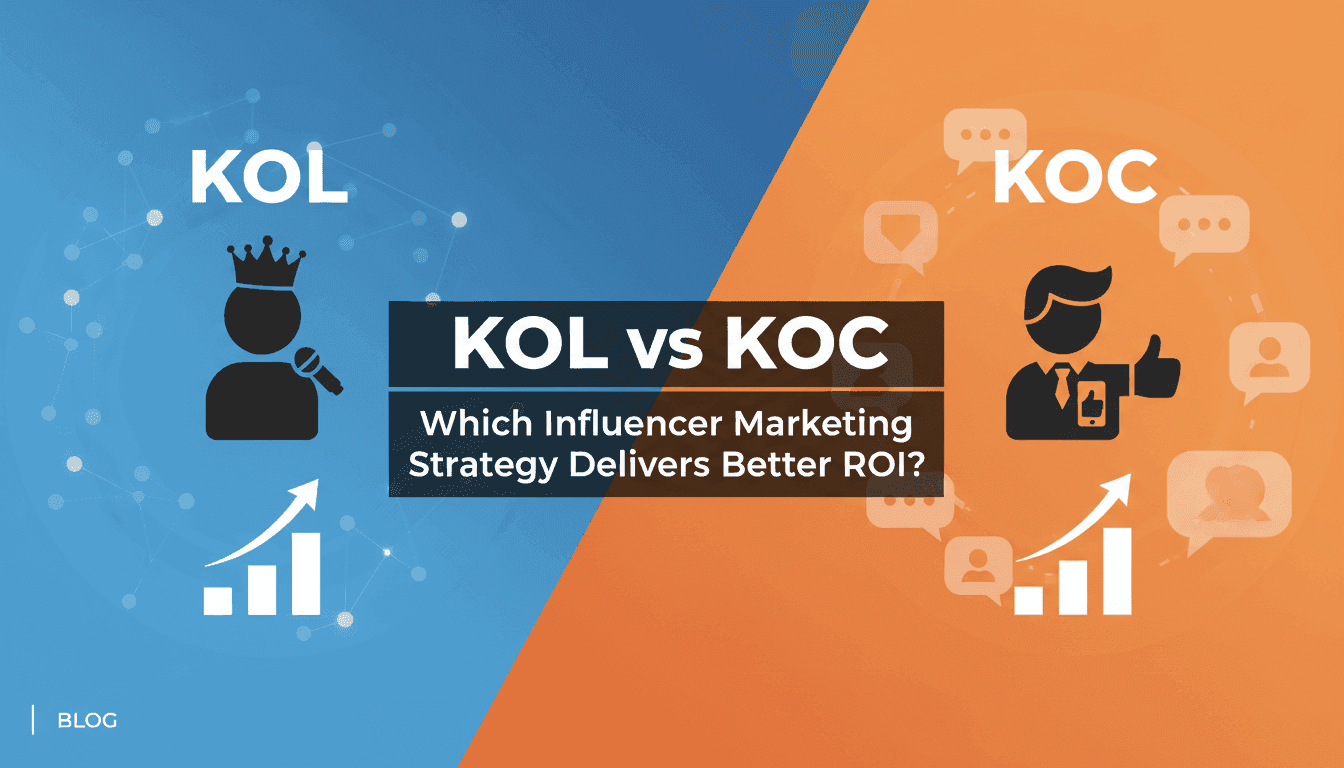
Table Of Contents
- Understanding KOLs and KOCs: Definitions and Key Differences
- The ROI Equation: How KOLs and KOCs Drive Different Results
- When KOLs Deliver Superior ROI
- When KOCs Outperform KOLs
- Cost Comparison: Investment Requirements for Each Strategy
- Platform-Specific Performance: Where Each Strategy Thrives
- Measuring Success: KPIs That Matter for KOL vs KOC Campaigns
- The Hybrid Approach: Combining KOLs and KOCs for Maximum Impact
- How AI Technology Transforms KOL and KOC Discovery
- Making the Right Choice for Your Brand in 2026
The influencer marketing landscape has evolved dramatically beyond the simple celebrity endorsement model. Today, brands face a strategic decision that can make or break their marketing ROI: should they invest in Key Opinion Leaders (KOLs) with massive reach, or Key Opinion Consumers (KOCs) who offer authentic, relatable content?
This isn't just a matter of budget allocation. The choice between KOL and KOC marketing strategies fundamentally shapes your brand's voice, audience perception, and conversion metrics. While KOLs can deliver explosive brand awareness and prestige association, KOCs often generate higher engagement rates and more genuine purchase intent at a fraction of the cost.
The reality is that neither strategy universally outperforms the other. Success depends on your specific goals, target audience, product category, and campaign objectives. In this comprehensive guide, we'll dissect both approaches, compare their ROI potential across different scenarios, and provide a framework for determining which strategy (or combination) will deliver the best results for your brand.
KOL vs KOC: ROI Breakdown
Choose the Right Influencer Strategy for Your Brand
Key Opinion Leaders (KOLs)
Established influencers with massive reach and industry authority
Key Opinion Consumers (KOCs)
Everyday consumers with authentic, highly engaged followings
When Each Strategy Wins
KOLs Excel At:
Brand awareness & market penetration
Prestige & luxury brand positioning
Complex or technical products
Creating viral cultural moments
KOCs Excel At:
High-consideration purchases
Driving authentic conversions
Budget-constrained campaigns
Building long-term community
Key Performance Differences
💡 The Winning Strategy: Hybrid Approach
The most successful brands don't choose one over the other—they combine both strategically:
Bottom Line: Neither strategy universally outperforms the other. Success depends on your goals, audience, budget, and product category. Use AI-powered tools to identify the optimal creator mix for your unique needs.
Discover Your Perfect Creator Mix with AIUnderstanding KOLs and KOCs: Definitions and Key Differences
Before diving into ROI comparisons, it's essential to understand what distinguishes these two types of influencers.
Key Opinion Leaders (KOLs) are established influencers with significant follower counts, typically ranging from 100,000 to millions of followers. They've built their authority through expertise in specific niches, whether that's fashion, technology, beauty, or lifestyle. KOLs are often recognized as industry experts, celebrities, or thought leaders who command attention and shape trends within their domains. Their content production quality tends to be high, often rivaling professional media outlets.
Key Opinion Consumers (KOCs), on the other hand, are everyday consumers with smaller but highly engaged followings, typically between 1,000 and 100,000 followers. What they lack in reach, they compensate for with authenticity and relatability. KOCs share genuine product experiences from a consumer perspective rather than a professional influencer standpoint. Their content feels more like a recommendation from a friend than a polished advertisement, which resonates powerfully with today's skeptical audiences.
The fundamental difference lies not just in follower count but in audience perception. KOLs are aspirational figures whose endorsements carry the weight of expertise and status. KOCs are peer validators whose recommendations feel trustworthy precisely because they aren't professional influencers. This distinction has profound implications for how each drives purchasing decisions and delivers ROI.
The ROI Equation: How KOLs and KOCs Drive Different Results
Return on investment in influencer marketing extends beyond simple cost-per-post calculations. A comprehensive ROI analysis must consider multiple value drivers:
Reach and Awareness: KOLs excel at generating massive impressions quickly. A single post from a KOL with 1 million followers can deliver exponentially more eyeballs than dozens of KOC posts. For brand awareness campaigns, new product launches, or market entry strategies, this reach advantage translates directly to ROI.
Engagement Quality: KOCs typically achieve engagement rates 2-3 times higher than KOLs. Their audiences are more active, more responsive, and more likely to save, share, and comment on content. This engagement quality often correlates with purchase intent, making KOCs particularly effective for conversion-focused campaigns.
Trust and Authenticity: Studies consistently show that consumers trust recommendations from people they perceive as peers more than celebrity endorsements. KOCs benefit from this authenticity premium, with their followers viewing recommendations as genuine rather than transactional. This trust advantage can significantly impact conversion rates, particularly for products where social proof matters.
Content Longevity: KOC content often has a longer shelf life in followers' minds. Because it feels less like an ad, it's more likely to be revisited, shared among friends, and referenced in purchasing decisions weeks or months later. KOL content, while impressive, is sometimes dismissed as "just another sponsored post."
The ROI equation must weigh these factors against cost, campaign objectives, and your specific target audience. A KOL might deliver 10x the reach at 5x the cost, but if conversions are your primary goal and the KOC audience is more aligned with your buyer persona, the smaller influencer could deliver superior ROI.
When KOLs Deliver Superior ROI
Despite the rising popularity of micro-influencers and KOCs, KOLs remain the optimal choice for specific marketing scenarios:
Brand Awareness and Market Penetration: When launching in a new market or category, nothing matches the awareness-building power of KOLs. Their ability to reach hundreds of thousands or millions of potential customers in a single post creates immediate market presence. For brands with sufficient budget, this top-of-funnel impact justifies the premium pricing.
Prestige and Brand Positioning: Luxury brands, premium products, and aspirational services benefit enormously from KOL associations. The endorsement of a recognized expert or celebrity elevates brand perception and creates desirability. This halo effect can influence not just immediate sales but long-term brand equity.
Complex or Technical Products: When products require expert explanation or demonstration, KOLs with established authority in the field provide credibility that KOCs cannot match. A tech KOL reviewing enterprise software or a fitness expert demonstrating advanced training equipment brings expertise that validates the product in ways peer recommendations cannot.
Trend Creation and Cultural Moments: KOLs have the power to set trends rather than just participate in them. Their posts can create viral moments, generate media coverage, and spark conversations that extend far beyond their immediate follower base. This cultural impact, while difficult to quantify, can deliver outsized ROI for brands seeking to become part of larger conversations.
For social media marketing campaigns that prioritize reach and prestige, KOLs remain an essential component of the influencer mix. The key is ensuring that the KOL's audience demographics align closely with your target market, maximizing the efficiency of every impression delivered.
When KOCs Outperform KOLs
The shift toward KOC marketing reflects changing consumer behaviors and platform algorithms that reward authentic engagement:
High-Consideration Purchases: For products that require research, comparison, and peer validation, KOCs drive superior conversion rates. Their detailed, honest reviews carry more weight with consumers actively in the buying process. A skincare enthusiast's genuine before-and-after documentation often influences purchases more effectively than a beauty celebrity's polished post.
Niche or Specialized Products: When targeting specific communities or interest groups, KOCs embedded within those communities deliver unmatched relevance. Their followers share specific interests, challenges, and needs, creating a highly qualified audience. A KOC who genuinely participates in a hobbyist community will resonate more deeply than a general lifestyle KOL.
Budget-Constrained Campaigns: Brands with limited influencer budgets can work with multiple KOCs for the price of a single KOL post, creating diverse content across multiple audience segments. This diversification reduces risk and increases the likelihood of discovering high-performing partnerships that can be scaled.
Building Community and Long-Term Relationships: KOCs are more accessible for ongoing partnerships and community building. Their followers expect to see consistent product integration in their lives, making sustained collaborations feel natural. This continuity builds stronger brand associations than one-off KOL posts.
Platform Algorithm Advantages: Social platforms increasingly prioritize authentic engagement over follower count. KOC content often performs better in algorithmic feeds because of higher engagement rates, resulting in greater organic reach relative to follower count. On platforms like Xiaohongshu, where authentic product discovery is central to the user experience, KOCs frequently outperform KOLs in both reach and conversion.
For content marketing strategies focused on building genuine connections with target audiences, KOCs offer compelling ROI advantages, particularly when campaigns prioritize conversion over awareness.
Cost Comparison: Investment Requirements for Each Strategy
Understanding the financial investment required for each approach is fundamental to ROI calculation:
KOL Pricing Structure: KOLs typically charge based on follower count and engagement metrics, with rates ranging from $1,000 to $100,000+ per post depending on the creator's reach and niche. Celebrity-level influencers can command six or seven figures for campaign partnerships. These rates often include specific deliverables (posts, stories, videos) with negotiated usage rights and exclusivity periods.
KOC Pricing Structure: KOCs usually charge $100 to $5,000 per post, with many accepting product seeding or affiliate arrangements instead of flat fees. The lower price point enables brands to work with dozens of KOCs for the cost of a single KOL, creating portfolio diversification and A/B testing opportunities.
Hidden Costs and Considerations: Beyond creator fees, both strategies involve production costs, relationship management time, performance tracking, and content rights. KOL campaigns often require more extensive contracts, creative approvals, and stakeholder coordination. KOC campaigns demand volume management systems to coordinate multiple partnerships efficiently.
Cost-Per-Engagement and Cost-Per-Acquisition: When calculating true ROI, divide total campaign investment by meaningful outcomes. KOLs might deliver a lower cost-per-impression but higher cost-per-engagement. KOCs often show lower cost-per-click and cost-per-acquisition despite higher cost-per-impression. The metric that matters most depends on your campaign objectives.
Modern AI influencer discovery platforms help optimize these investments by identifying creators who deliver the best performance metrics within your budget constraints, ensuring every dollar is allocated to partnerships with the highest ROI potential.
Platform-Specific Performance: Where Each Strategy Thrives
Different social platforms favor different influencer types, affecting where each strategy delivers optimal ROI:
Instagram: This platform supports both strategies effectively, but with different strengths. KOLs excel in feed posts and Reels that benefit from high production value, while KOCs often outperform in Stories and carousel posts where authenticity and detail matter more than polish. Instagram's shopping features enable both to drive direct conversions.
TikTok: The platform's algorithm democratizes reach, making KOCs particularly effective. Authentic, creative content from smaller creators regularly outperforms polished KOL posts. The platform rewards genuine entertainment and value over follower count, giving KOCs a structural advantage in organic reach.
YouTube: Long-form content favors expertise and production quality, giving KOLs advantages in tutorial, review, and educational content. However, niche KOCs with dedicated audiences often deliver superior conversion rates for specific product categories through detailed, honest reviews that viewers trust.
Xiaohongshu (Little Red Book): This discovery-focused platform is KOC territory. Users specifically seek authentic product recommendations from real consumers. KOCs who provide detailed, honest reviews with practical tips dominate this platform, often delivering higher conversion rates than celebrity endorsements.
LinkedIn and Twitter/X: Professional KOLs with established thought leadership positions excel on these platforms, where authority and expertise drive engagement. B2B brands particularly benefit from KOL partnerships on professional networks.
An effective influencer marketing strategy recognizes these platform-specific dynamics and allocates KOL versus KOC investments accordingly, optimizing for each platform's unique audience behaviors and algorithmic preferences.
Measuring Success: KPIs That Matter for KOL vs KOC Campaigns
Accurate ROI measurement requires tracking the right metrics for each strategy:
KOL Campaign Metrics:
- Reach and Impressions: Primary value drivers for awareness campaigns
- Brand Mention Volume: Tracking conversation lift and share of voice
- Media Value: Equivalent advertising cost of impressions delivered
- Follower Growth: New audience acquisition from KOL exposure
- Sentiment Analysis: How KOL association affects brand perception
KOC Campaign Metrics:
- Engagement Rate: Comments, saves, and shares relative to reach
- Click-Through Rate: Traffic driven to landing pages or product pages
- Conversion Rate: Actual purchases attributed to KOC content
- Cost Per Acquisition: Total campaign cost divided by conversions
- Content Performance: Which KOC content styles and formats drive results
Shared Metrics:
- Return on Ad Spend (ROAS): Revenue generated versus total investment
- Customer Lifetime Value: Long-term value of customers acquired
- Content Reusability: Additional value from repurposing creator content
- Partnership Scalability: Which relationships merit expanded investment
Advanced influencer marketing platforms provide comprehensive analytics across these metrics, enabling data-driven optimization of your creator mix. The most sophisticated approaches use AI to identify patterns in which creator characteristics, content formats, and messaging strategies deliver the best ROI for specific campaign objectives.
The Hybrid Approach: Combining KOLs and KOCs for Maximum Impact
The most effective influencer strategies in 2026 don't choose between KOLs and KOCs but strategically combine both:
The Pyramid Strategy positions a small number of KOLs at the top for broad awareness and credibility, supported by a larger base of KOCs who provide detailed product validation and drive conversions. This approach captures both reach and authenticity, creating a complete funnel from awareness to purchase.
Sequential Campaigns use KOLs to launch products and create initial buzz, followed by KOC activations that sustain momentum and convert interested audiences. The KOL creates the cultural moment; KOCs provide the social proof that drives purchases.
Segmented Targeting allocates KOLs to top-of-funnel cold audiences and premium market segments, while deploying KOCs against warm audiences and value-conscious segments. This matching ensures each audience receives the most persuasive messenger.
Geographic Strategies employ international or national KOLs for broad market coverage, complemented by regional KOCs who understand local preferences and cultural nuances. This combination delivers both scale and relevance.
The optimal mix depends on your budget, objectives, product category, and target audience. A luxury fashion brand might allocate 70% of budget to KOLs and 30% to KOCs, while a DTC skincare startup might reverse that ratio. Testing different allocations and measuring performance allows you to discover your brand's ideal balance.
How AI Technology Transforms KOL and KOC Discovery
The traditional approach to influencer selection involved manual database searches, spreadsheet comparisons, and educated guesses about creator-brand fit. This process was time-consuming, limited in scope, and often missed high-potential partnerships.
AI-powered influencer discovery fundamentally changes this equation. Advanced platforms now function as always-on social media agents that understand campaign briefs in plain English and scan multiple platforms in real time to identify optimal creator matches.
These systems analyze far beyond follower counts and basic engagement rates. They evaluate content quality, audience authenticity, brand value alignment, historical campaign performance, and even predictive ROI potential. The AI considers factors human analysts might miss: posting consistency, audience demographic shifts, engagement pattern authenticity, and content style evolution.
For KOL campaigns, AI instantly identifies creators whose audience demographics precisely match your target market, eliminating wasted reach. For KOC strategies, it surfaces passionate brand advocates you never knew existed, creators whose small but highly engaged audiences perfectly align with your ideal customer profile.
This technology democratizes access to data-driven influencer marketing. Small brands with limited resources can now execute sophisticated creator selection strategies previously available only to enterprises with dedicated influencer teams. The AI levels the playing field, ensuring that budget efficiency rather than absolute budget size determines campaign success.
The integration of AI marketing services into influencer campaign management enables continuous optimization. The system learns from each campaign, identifying which creator characteristics and content approaches drive the best ROI for your specific brand, then applying those insights to future selections.
Making the Right Choice for Your Brand in 2026
Choosing between KOL and KOC strategies requires honest assessment of your current situation and objectives:
Assess Your Campaign Objectives: If your primary goal is brand awareness, market entry, or establishing prestige, KOLs offer advantages. If you're focused on conversions, building community, or maximizing budget efficiency, KOCs deserve priority.
Know Your Audience: Where does your target customer seek product recommendations? Do they aspire to influencer lifestyles or trust peer reviews? Understanding these preferences guides strategy selection.
Evaluate Your Budget: Be realistic about what you can afford and what different investment levels will deliver. Sometimes a robust KOC campaign outperforms a single KOL post that exhausts your entire budget.
Consider Your Product Category: Some products inherently benefit from expert endorsement, while others sell better through authentic peer recommendations. Match your strategy to your product's natural purchase triggers.
Test and Iterate: Don't commit your entire budget to one approach without testing. Run pilot campaigns with both KOLs and KOCs, measure performance rigorously, and scale what works.
The brands seeing the best ROI in 2026 are those that view KOL versus KOC not as an either-or choice but as complementary tools in a comprehensive influencer strategy. They use data and technology to continuously optimize their creator mix, allocating budgets dynamically based on performance rather than assumptions.
By leveraging modern business AI consulting approaches and advanced creator discovery platforms, you can build an influencer program that delivers measurable ROI regardless of which strategy or combination you choose. The key is matching the right creators to the right objectives at the right investment level, then measuring results with the precision that today's technology enables.
The question isn't whether KOLs or KOCs deliver better ROI. The answer depends entirely on your specific goals, audience, budget, and product category. KOLs excel at building awareness, establishing prestige, and creating cultural moments. KOCs outperform in driving conversions, building trust, and delivering budget efficiency.
The most successful brands in 2026 recognize that both strategies have distinct value propositions. They build hybrid approaches that leverage KOLs for reach and authority while deploying KOCs for authenticity and conversion. They use data and AI-powered tools to identify the optimal creator mix for their unique situation rather than following generic best practices.
Ultimately, ROI comes from strategic alignment between your objectives and your influencer selection, supported by rigorous measurement and continuous optimization. Whether you invest primarily in KOLs, focus on KOCs, or blend both approaches, success requires choosing creators whose audiences, values, and content styles authentically align with your brand. Technology has made this precision targeting accessible to brands of all sizes. The question is no longer which strategy is universally better, but which combination will deliver the best results for your specific brand right now.
Ready to discover the perfect mix of KOLs and KOCs for your brand? StarScout AI uses advanced AI to scan Instagram, TikTok, YouTube, X, Xiaohongshu, and more in real time, identifying creators whose content quality, audience engagement, and brand values align precisely with your marketing goals. Stop guessing and start knowing which influencer partnerships will deliver the ROI your brand deserves.