
KOL vs Influencer: Understanding the Critical Differences That Impact Your ROI
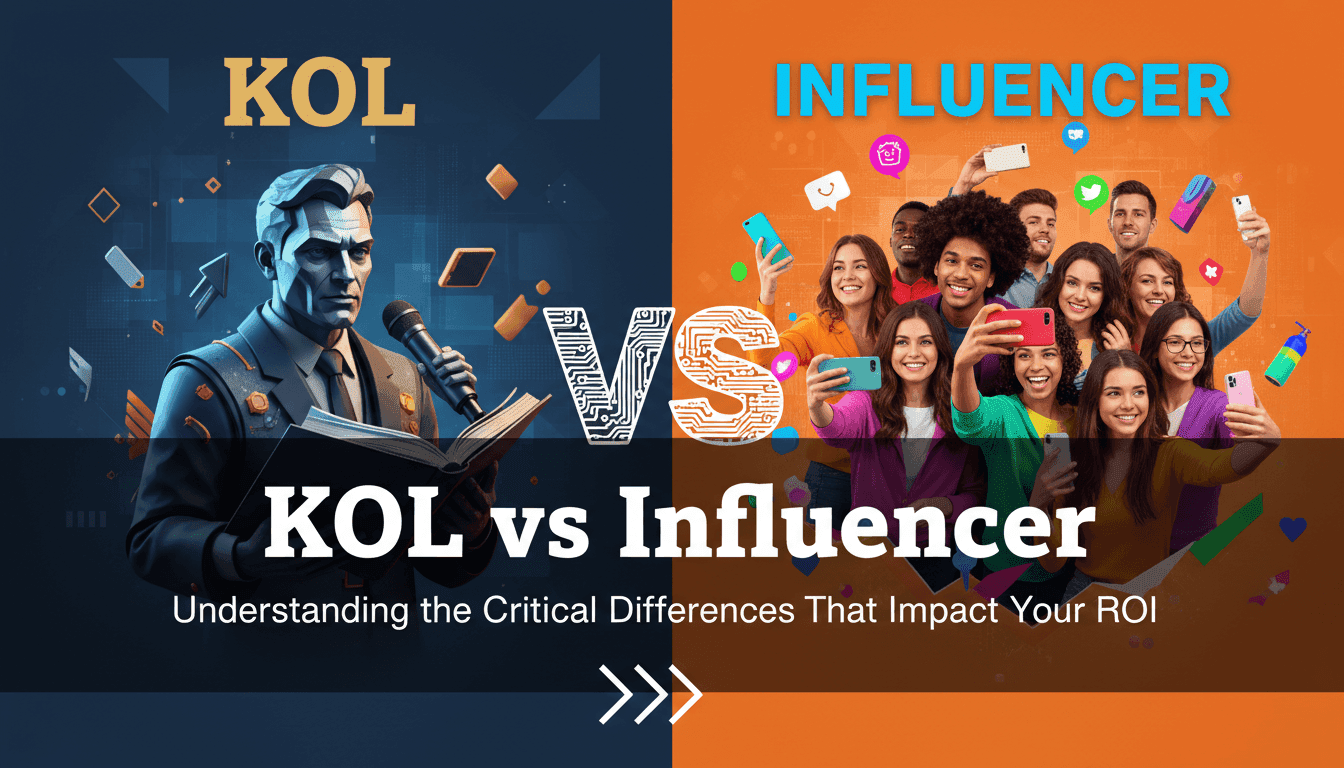
Table Of Contents
- What Is a Key Opinion Leader (KOL)?
- What Is an Influencer?
- The 5 Critical Differences Between KOLs and Influencers
- How KOL vs Influencer Choice Impacts Your ROI
- When to Choose KOLs Over Influencers
- When to Choose Influencers Over KOLs
- The Power of Combining KOLs and Influencers
- KOL Marketing in Asian Markets: The Xiaohongshu Factor
- How to Find the Right KOLs and Influencers for Your Brand
- Measuring ROI: Different Metrics for Different Strategies
The influencer marketing industry is projected to reach $32.55 billion in market value, with brands earning an average of $5.78 for every dollar invested. Yet despite this explosive growth, many marketers struggle with a fundamental question that directly impacts their campaign performance: should they partner with Key Opinion Leaders (KOLs) or traditional influencers?
This isn't just semantic confusion. The choice between KOLs and influencers can mean the difference between a campaign that builds lasting credibility and one that generates fleeting engagement. It affects your budget allocation, content strategy, platform selection, and ultimately, your return on investment.
While the terms are often used interchangeably, KOLs and influencers represent fundamentally different approaches to creator marketing. KOLs build influence through professional expertise and industry credentials, commanding respect in specialized fields like healthcare, technology, or finance. Influencers, on the other hand, cultivate communities through relatability, entertainment value, and lifestyle content that resonates across broader audiences.
Understanding these distinctions matters now more than ever. With 59% of marketers planning to increase their influencer partnerships and 76% of C-suite executives expanding budgets, the pressure to demonstrate measurable ROI has never been higher. Making the wrong choice doesn't just waste budget; it can undermine your brand credibility and miss your target audience entirely.
In this comprehensive guide, we'll break down the critical differences between KOLs and influencers, explore how each impacts your marketing ROI, and provide a strategic framework for choosing the right approach for your brand goals. Whether you're launching a technical B2B product or scaling a consumer brand across global markets, you'll learn exactly when to leverage KOL credibility, when to harness influencer reach, and how to combine both for maximum impact.
KOL vs Influencer: The ROI Decision
Understanding which creator type delivers better results for your marketing goals
The 5 Critical Differences
🎓 Source of Influence
👥 Audience Motivation
🎨 Content Approach
💼 Career Focus
📱 Platform Presence
When to Choose Each Strategy
Choose KOLs For:
Choose Influencers For:
💡 Pro Tip: The Hybrid Advantage
The most successful campaigns combine both strategies. Use KOLs for credibility and expert validation while deploying influencers for scaled reach and engagement. The CeraVe campaign combined celebrity influencers with dermatologist KOLs, resulting in a 64% increase in earned media value.
Key ROI Metrics to Track
Ready to Optimize Your Creator Strategy?
Find the perfect KOLs and influencers with AI-powered precision across Instagram, TikTok, YouTube, Xiaohongshu, and more
Discover StarScout AIWhat Is a Key Opinion Leader (KOL)?
A Key Opinion Leader (KOL) is an individual recognized as an expert or authority figure within a specific industry or specialized field. Unlike traditional influencers who build followings through content creation, KOLs earn their influence through professional achievements, deep expertise, and years of experience in their domains.
KOLs typically hold positions of credibility in fields such as medicine, science, technology, finance, or specialized industries. They might be practicing doctors, published researchers, industry executives, certified professionals, or established thought leaders whose opinions shape industry conversations and purchasing decisions.
What sets KOLs apart is that influencing audiences isn't their primary profession. A dermatologist who occasionally reviews skincare products, a cybersecurity expert who evaluates software solutions, or a financial advisor who discusses investment strategies are all KOLs who leverage their professional credentials to build trust with their audiences.
Their influence extends beyond social media. KOLs often appear in traditional media, speak at industry conferences, publish research papers, contribute to professional journals, and participate in expert panels. This multi-channel presence reinforces their authority and reaches audiences who value depth of knowledge over entertainment value.
What Is an Influencer?
An influencer is a content creator who has built a dedicated following on social media platforms through consistent, engaging content that resonates with their audience. Their influence stems primarily from their ability to connect with followers, create compelling content, and shape opinions through personal recommendations and lifestyle integration.
Influencers range from nano-influencers with fewer than 10,000 followers to mega-influencers with millions of followers. What unites them is that content creation and audience engagement form the core of their professional identity. They invest significant time managing their online presence, responding to comments, understanding platform algorithms, and developing content strategies.
The influencer's power lies in relatability and accessibility. Followers engage with influencers because they perceive them as authentic, aspirational, or entertaining. This personal connection creates a unique form of trust where recommendations feel like advice from a friend rather than traditional advertising.
Platform expertise defines the modern influencer. They understand how to optimize content for Instagram's visual storytelling, TikTok's short-form video trends, YouTube's long-form narratives, or emerging platforms like Xiaohongshu in Asian markets. This native fluency with digital platforms allows influencers to create content that drives engagement and conversion.
The 5 Critical Differences Between KOLs and Influencers
Source of Influence: Expertise vs. Popularity
The fundamental distinction between KOLs and influencers lies in where their influence originates. KOLs derive their authority from specialized knowledge, professional credentials, and industry achievements. Their opinions carry weight because of demonstrated expertise, not follower counts.
Consider a board-certified dermatologist discussing skincare ingredients versus a beauty influencer reviewing the same products. The dermatologist's medical degree, clinical experience, and understanding of skin biology provide a different type of credibility than the influencer's personal experience and aesthetic sensibility. Both have value, but they serve different purposes in a marketing strategy.
Influencers build their influence through content quality, personality, consistency, and audience engagement. Their power comes from having mastered the art of capturing attention, creating shareable moments, and fostering community. They may lack formal credentials in a field, but they excel at making content that people want to watch, share, and act upon.
Audience Motivation: Education vs. Entertainment
The reasons audiences follow KOLs versus influencers reveal another critical difference. People follow KOLs because they want to learn from an expert. They're seeking informed perspectives, industry insights, evidence-based recommendations, or professional guidance on complex topics.
KOL audiences are typically more niche and specialized. They're practitioners in the same field, consumers researching high-consideration purchases, or individuals seeking authoritative information on specific subjects. This creates highly engaged, targeted audiences that may be smaller in size but higher in conversion potential.
Influencer audiences, in contrast, seek entertainment, inspiration, lifestyle guidance, or aspirational content. They follow influencers whose aesthetic matches their taste, whose personality resonates with them, or whose content provides enjoyment and escape. The relationship is more personal and emotional than purely informational.
Content Approach: Professional vs. Creative
KOLs and influencers approach content creation from fundamentally different angles. KOLs typically produce content that's educational, analytical, evidence-based, and professionally focused. Their content might be less polished from a production standpoint but richer in substantive information and expert analysis.
Because content creation isn't their primary skill, KOL campaigns often require more hands-on brand involvement. Marketing teams may need to provide creative support, production assistance, or content frameworks to help KOLs translate their expertise into compelling digital content.
Influencers are professional content creators who excel at producing visually appealing, engaging, trend-aligned content. They understand platform algorithms, know what resonates with their specific audience, and can seamlessly integrate brand messages into their content style. Influencers typically require creative freedom to maintain authenticity with their followers.
Career Focus: Complementary vs. Primary Income
For KOLs, brand partnerships and content creation are typically supplementary to their main profession. A surgeon's primary focus remains surgery, a researcher continues their academic work, and an industry executive's main role is running their company. This means KOL partnerships may be less frequent but potentially more impactful when they occur.
This dynamic affects negotiation, timeline expectations, and collaboration approaches. KOLs may be selective about partnerships, require longer lead times, or have scheduling constraints based on their professional commitments. However, this selectivity can enhance authenticity since KOL endorsements aren't driven by content quotas.
For influencers, content creation and brand partnerships constitute their primary income source. They're professional marketers who understand campaign mechanics, can meet production deadlines, and actively manage multiple brand relationships. This professional approach makes influencer campaigns more straightforward to execute at scale.
Platform Presence: Multi-Channel vs. Social-First
KOLs typically maintain influence across multiple channels beyond social media. Their authority might be established through academic publications, conference presentations, media appearances, industry associations, or professional networks before ever touching Instagram or TikTok. Social media is one channel among many rather than the foundation of their influence.
This multi-channel presence means KOL partnerships can extend beyond social posts. Brands might engage KOLs for speaking engagements, whitepapers, product development consultation, or media quotes, creating diverse touchpoints that reinforce credibility.
Influencers are inherently social-media-native. Their influence was built on platforms like Instagram, TikTok, YouTube, or specialized networks like Xiaohongshu. They understand platform-specific best practices, trends, and audience behaviors because these platforms are their professional home.
How KOL vs Influencer Choice Impacts Your ROI
The strategic choice between KOL and influencer partnerships directly affects your marketing return on investment, though the impact manifests differently for each approach. Understanding these ROI dynamics helps justify budget allocation and set appropriate success metrics.
KOL partnerships typically deliver ROI through credibility-driven conversion. When a respected expert endorses your product, it reduces purchase friction for high-consideration items, shortens complex sales cycles, and commands premium pricing justification. Research shows that 44% of consumers are more likely to trust an expert over brand messaging, creating powerful conversion potential in sectors where expertise matters.
The ROI timeline for KOL partnerships often extends longer than influencer campaigns. While you might not see immediate sales spikes, KOL associations build lasting brand equity, establish thought leadership positioning, and create content assets that deliver value long after the initial campaign. A single endorsement from a respected KOL can influence industry conversations for months or years.
Influencer partnerships excel at generating immediate, measurable performance metrics. Brands report an average ROI of $5.78 for every dollar spent on influencer marketing, with top-performing campaigns achieving $18-$20 returns per dollar invested. This performance advantage comes from influencers' ability to drive direct action through compelling content, clear calls-to-action, and engaged audiences primed to convert.
Platform choice also affects ROI differently. Recent data shows that TikTok influencer campaigns delivered an 11.8% short-term ROI, with 75% of advertisers reporting higher ROI from TikTok influencers compared to other platforms. Meanwhile, KOL partnerships on professional networks like LinkedIn or industry-specific platforms may show lower immediate returns but higher lifetime customer value.
The cost structures differ significantly as well. Top-tier KOLs may command $10,000-$50,000 or more per partnership, but their niche audiences convert at higher rates. Micro-influencers (10,000-100,000 followers) typically charge $100-$1,000 per post with engagement rates of 6.15-6.76%, offering superior engagement-to-cost ratios for brands focused on scale.
Crucially, 41% of brands report that repurposing creator content in paid ads delivers higher ROI than studio-produced creative. This content reuse potential extends the value of both KOL and influencer partnerships beyond the original post, multiplying initial investment returns.
When to Choose KOLs Over Influencers
Certain marketing scenarios strongly favor KOL partnerships over traditional influencer collaborations. Understanding these situations helps optimize your creator marketing strategy.
Complex or Technical Products: When your product requires explanation, demonstration, or expert validation, KOLs provide the credibility needed to overcome skepticism. B2B software, medical devices, financial services, scientific equipment, or specialized tools benefit from expert endorsement that can translate technical features into meaningful benefits.
High-Consideration Purchases: Products with significant price points, long-term commitments, or important consequences demand trust that KOL expertise provides. A financial advisor's endorsement of an investment platform carries more weight than a lifestyle influencer's recommendation because the stakes are high and expertise matters.
Niche or Specialized Markets: When targeting industry professionals, specialized practitioners, or audiences with deep subject knowledge, KOLs speak the language of your target market. Their content reaches pre-qualified audiences actively seeking expert information rather than broad consumer audiences.
Building Industry Credibility: New brands entering established markets, companies launching innovative categories, or businesses repositioning their brand benefit from KOL associations. When a respected industry figure endorses your brand, it signals legitimacy and accelerates trust-building that might otherwise take years.
Regulatory or Sensitive Categories: Industries with strict advertising regulations, such as healthcare, pharmaceuticals, or finance, often find KOL partnerships more compliant and effective. KOLs can discuss products within their professional expertise without triggering regulatory concerns that might accompany influencer advertising.
Thought Leadership Goals: If your marketing objectives include establishing your brand as an industry innovator, contributing to professional conversations, or influencing industry standards, KOL partnerships align better than influencer campaigns focused on consumer engagement.
When to Choose Influencers Over KOLs
Influencer partnerships deliver superior results in different strategic scenarios that emphasize reach, engagement, and cultural relevance.
Broad Consumer Products: When marketing accessible, everyday products with mass appeal, influencers excel at driving awareness and trial. Fashion, beauty, food, lifestyle, and consumer electronics benefit from influencer content that demonstrates products in relatable, aspirational contexts.
Visual or Lifestyle-Driven Brands: Products that tell their story through imagery, emotion, or lifestyle association thrive in influencer partnerships. Instagram, TikTok, and YouTube influencers create compelling visual narratives that showcase products in authentic usage scenarios that professional photography can't replicate.
Rapid Awareness Campaigns: When you need to create buzz quickly, influencers can mobilize their audiences faster than KOL partnerships. Product launches, limited-edition releases, seasonal campaigns, or trend-driven marketing benefit from influencers' ability to generate immediate attention and engagement.
Platform-Specific Strategies: If your marketing strategy targets specific social platforms, influencers who've mastered those platforms deliver better results. TikTok virality, Instagram aesthetic, YouTube storytelling, or Xiaohongshu discovery all require platform-native expertise that influencers possess inherently.
Lower Price Point Products: For products with minimal purchase friction, influencer recommendations can drive impulse purchases and quick conversions. The 49% of consumers who make influencer-inspired purchases at least monthly are primarily buying accessible products where expert validation isn't necessary.
Youth or Trend-Focused Demographics: Generation Z, which will comprise 19% of global consumer spending by 2030, shows exceptional receptiveness to influencer marketing. With 81% following creators and 48% trusting their recommendations, influencer partnerships are essential for brands targeting younger demographics.
Content Creation at Scale: When you need volume of content across multiple creators, platforms, and formats, influencer partnerships scale more efficiently than KOL relationships. Multiple micro-influencers can create diverse content perspectives that a single KOL partnership can't match.
The Power of Combining KOLs and Influencers
The most sophisticated creator marketing strategies don't choose between KOLs and influencers—they strategically combine both to maximize campaign impact across different audience segments and funnel stages.
This hybrid approach leverages the unique strengths of each creator type. KOLs add credibility, depth, and expert validation while influencers create buzz, engagement, and scaled reach. Together, they address different audience motivations and move consumers through the entire purchase journey from awareness to conversion.
Consider the successful CeraVe skincare campaign that combined macro influencer Michael Cera with dermatologist KOLs like Dr. Muneeb Shah. The celebrity influencer generated mass awareness and cultural conversation, while the dermatologist KOLs provided scientific credibility and educated consumers on product benefits. This combination resulted in a 64% increase in earned media value within one year.
The funnel-based approach assigns different creator types to specific marketing objectives. Use influencers for top-of-funnel awareness, generating attention and introducing your brand to new audiences through entertaining, shareable content. Deploy KOLs for middle and bottom-funnel conversion, where their expertise addresses considerations, overcomes objections, and provides the final validation needed for purchase decisions.
Platform strategy also benefits from combination approaches. Influencers might drive discovery and engagement on visual platforms like Instagram and TikTok, while KOLs contribute thought leadership content on LinkedIn, industry publications, or professional communities. This multi-platform presence ensures your brand reaches audiences across their preferred information channels.
Budget allocation for hybrid strategies typically invests 60-70% in micro-influencers for scaled reach and engagement, with 30-40% reserved for strategic KOL partnerships that provide credibility anchors. This balance maximizes both volume and quality of creator partnerships.
Content repurposing multiplies the value of hybrid approaches. KOL insights can be featured in influencer content, adding expert validation to entertaining formats. Influencer content can be amplified through KOL channels, extending creative reach to professional audiences. Both can be reused in paid advertising, email marketing, and owned media channels.
KOL Marketing in Asian Markets: The Xiaohongshu Factor
KOL marketing dynamics differ significantly in Asian markets, particularly in China where the KOL ecosystem is more developed and culturally embedded than in Western markets. Understanding these regional differences is crucial for brands with global ambitions or Asian market entry strategies.
In China, KOLs command exceptional influence over consumer purchasing decisions. Research indicates that approximately 30% of all purchasing choices among Chinese consumers are influenced by KOL comments or recommendations. This influence extends across all product categories, from luxury goods to everyday purchases.
Platform ecosystems shape KOL strategies in Asian markets. Xiaohongshu (Little Red Book), with over 300 million active users, functions as a hybrid social media and e-commerce platform where KOL marketing thrives through authentic product reviews and lifestyle sharing. The platform's user base skews toward young, affluent females interested in fashion, beauty, and lifestyle products.
Xiaohongshu's unique "content seeding" approach relies heavily on KOCs (Key Opinion Consumers)—everyday users who share genuine product experiences. Brands often combine top-tier KOLs for awareness with numerous KOCs for authentic social proof, creating a pyramid effect that drives both credibility and scale.
Livestream commerce represents another Asian KOL innovation that's reshaping influencer ROI. Top KOLs like Li Jiaqi ("Lipstick King") have sold 15,000 lipsticks in five minutes during livestreams, demonstrating the conversion power of KOL-led commerce. Platforms like Douyin (Chinese TikTok) and Kuaishou integrate direct purchasing into livestreams, collapsing the gap between influence and transaction.
Cost structures in Asian KOL marketing reflect this influence. Micro-influencers (10,000-100,000 followers) charge $100-$1,000 per post, mid-tier KOLs (100,000-1 million followers) command $1,000-$10,000, while top-tier KOLs and celebrities demand $10,000-$50,000 or more per post, with comprehensive campaigns potentially exceeding $200,000.
For brands expanding into Asian markets, partnering with local expertise becomes essential. The complexity of platform selection, KOL verification (avoiding fake followers), cultural localization, and campaign execution requires specialized knowledge that influencer marketing agencies with regional experience provide.
How to Find the Right KOLs and Influencers for Your Brand
Finding creators who align with your brand values, reach your target audience, and deliver measurable results requires a strategic approach that goes beyond follower counts and vanity metrics.
Start by defining clear campaign objectives that guide your search criteria. Are you building credibility in a new market? Driving conversions for a product launch? Expanding brand awareness among a specific demographic? Your goals determine whether you need KOL expertise, influencer reach, or a combination of both.
Audience analysis matters more than audience size. Evaluate whether a creator's followers match your target customer demographics, psychographics, and purchasing behaviors. A micro-influencer with 20,000 highly engaged followers in your exact niche often delivers better ROI than a mega-influencer with millions of followers across diverse, less relevant audiences.
For KOL identification, look beyond social media to professional channels. Search industry publications, conference speaker lists, academic institutions, professional associations, and media expert databases. KOLs often establish authority in traditional channels before building social presence.
Authenticity verification is crucial, especially when evaluating influencers. Check engagement rates (likes, comments, saves relative to followers), comment quality (genuine conversations versus generic responses), follower growth patterns (organic versus suspicious spikes), and past brand partnerships (authentic integrations versus excessive promotions).
On platforms like Xiaohongshu, the key metric is likes plus saves divided by followers. A ratio of 1.5 or higher indicates a quality account with genuine engagement. Review the creator's last 90 days of content to assess consistency and identify viral potential.
Content alignment ensures partnership success. Review a creator's existing content style, values, tone, and subject matter. Does their content aesthetic match your brand? Do they already discuss topics adjacent to your product category? Have they worked with competitors, and if so, how authentically?
Modern AI-powered influencer discovery platforms streamline this process by analyzing massive creator databases across Instagram, TikTok, YouTube, X, Xiaohongshu, and other networks in real-time. These platforms can understand your brand brief in plain English, convert it to precise search criteria, and surface creators whose content quality, audience engagement, and brand values align with your marketing goals.
Vetting KOL credentials requires additional diligence. Verify professional qualifications, review published work or research, assess industry recognition and awards, check speaking engagements or media appearances, and evaluate their standing within professional communities. A claimed "expert" should have demonstrable expertise beyond self-proclamation.
Measuring ROI: Different Metrics for Different Strategies
Successful creator marketing requires measurement frameworks that align with your chosen strategy, whether KOL partnerships, influencer campaigns, or hybrid approaches. Different creator types drive different results, demanding different metrics.
For KOL partnerships focused on credibility and authority, track thought leadership metrics including media mentions and pickups, industry conversation participation, speaking engagement invitations, professional network growth, and content citation or sharing within industry circles. These indicators measure influence on professional audiences and industry perception shifts.
Brand lift metrics reveal KOL impact on perception: aided and unaided brand awareness, brand attribute association (quality, innovation, trustworthiness), consideration set inclusion, and purchase intent among target audiences. Compare these metrics before and after KOL campaigns to quantify perception shifts.
Long-term value indicators capture KOL partnership ROI that extends beyond immediate campaign periods: customer lifetime value of KOL-influenced customers, retention rates for customers acquired through KOL channels, premium pricing tolerance among KOL-aware audiences, and content asset longevity (how long KOL content continues driving value).
For influencer campaigns emphasizing engagement and conversion, focus on performance metrics including reach and impressions, engagement rate (likes, comments, shares, saves), click-through rate on campaign links, conversion rate from influencer traffic, and cost per acquisition.
Platform-specific metrics matter for influencer campaigns. On TikTok, track video completion rate, share rate, and duet/stitch participation. On Instagram, monitor saves (indicating high-value content), story interactions, and shopping tag clicks. For Xiaohongshu, likes plus saves divided by followers indicates content quality and reach potential.
Direct attribution requires proper tracking infrastructure. Implement unique discount codes per creator, UTM parameters for all campaign links, dedicated landing pages for creator traffic, affiliate tracking systems for ongoing partnerships, and pixel-based conversion tracking to attribute sales accurately.
Content performance extends ROI measurement beyond initial posts. Track repurposing value by measuring performance of creator content in paid advertising, usage across owned channels (website, email, retail), organic reach beyond the original post, and user-generated content inspired by creator campaigns.
The most sophisticated brands implement multi-touch attribution models that recognize creator content rarely drives conversion alone. Measure assisted conversions (creator touchpoints in longer customer journeys), view-through conversions (purchases after seeing but not clicking creator content), and brand search lift (increased branded search following creator campaigns).
Comparative analysis provides context for performance evaluation. Benchmark your KOL and influencer campaigns against industry standards: average influencer marketing ROI of $5.78 per dollar spent, micro-influencer engagement rates of 6.15-6.76%, TikTok campaign ROI of 11.8%, and top-performing campaign returns of $18-$20 per dollar invested.
For brands seeking comprehensive measurement and optimization, AI-powered analytics platforms provide the data infrastructure needed to track performance across multiple creators, platforms, and campaign types simultaneously. This enables the pattern recognition and predictive insights that separate exceptional creator marketing programs from merely good ones.
The distinction between KOLs and influencers isn't just semantic—it's strategic. KOLs bring expertise, credibility, and authority that influence high-consideration decisions in specialized markets. Influencers deliver reach, engagement, and creative content that drives awareness and conversion across broad consumer audiences. Both have their place in modern marketing, and the brands achieving exceptional ROI are those that strategically deploy each approach where it delivers maximum value.
The data makes the opportunity clear: with the influencer marketing industry projected to reach $32.55 billion and brands earning an average of $5.78 for every dollar invested, creator partnerships have moved from experimental tactics to essential strategy. But success demands precision in creator selection, authenticity in partnerships, and rigor in measurement.
As you develop your creator marketing strategy, remember that the best approach isn't always either-or. The CeraVe campaign demonstrated how combining celebrity influencers with dermatologist KOLs can generate both buzz and credibility, delivering a 64% increase in earned media value. Consider how your brand might leverage KOLs for credibility-building in niche markets while deploying influencers for scaled awareness and engagement.
Platform strategy matters increasingly in this landscape. While Instagram and TikTok dominate Western influencer marketing, brands with global ambitions must understand platforms like Xiaohongshu where KOL influence shapes 30% of Chinese consumer purchasing decisions. Cross-platform creator strategies, informed by local market dynamics, will separate leading brands from those struggling to scale internationally.
The future of creator marketing belongs to brands that embrace data-driven decision-making. Manual creator discovery across fragmented platforms can't match the precision of AI-powered systems that analyze millions of creators in real-time, matching your exact brand requirements with creators whose audiences, values, and content align perfectly with your goals.
Whether you're launching a technical B2B product that demands KOL credibility, scaling a consumer brand that needs influencer reach, or executing sophisticated campaigns that combine both approaches, success starts with clarity about your objectives and precision in creator selection. The ROI potential is substantial, but it requires strategic thinking, authentic partnerships, and continuous optimization based on performance data.
Ready to Transform Your Influencer Marketing ROI?
Stop wasting budget on misaligned creator partnerships. StarScout AI uses advanced AI to understand your brand brief in plain English and scan Instagram, TikTok, YouTube, X, Xiaohongshu, and other networks in real-time to find creators whose content quality, audience engagement, and brand values perfectly align with your marketing goals.
Whether you need KOL expertise, influencer reach, or strategic combinations of both, StarScout's always-on social media intelligence ensures you're partnering with the right creators at the right time for maximum ROI.
Discover how AI-powered creator discovery can transform your influencer marketing results. Get started with StarScout AI today.