
KOL Korea: The Complete K-Beauty & K-Pop Influencer Marketing Guide
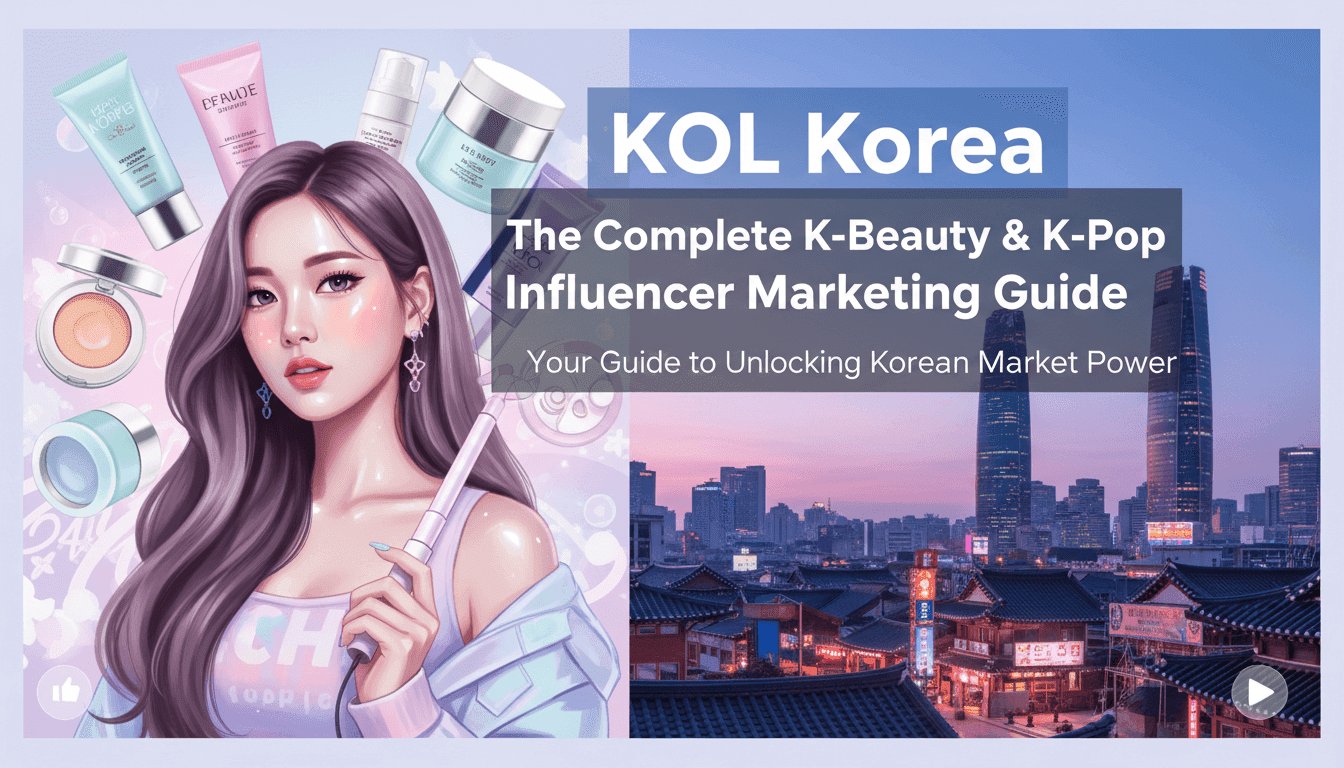
Table Of Contents
- What Is a KOL in the Korean Context?
- Why Korea Is a Global Influencer Marketing Powerhouse
- K-Beauty KOLs: How the Industry Works
- K-Pop Influencer Marketing: A Different Beast
- Key Platforms for Korean KOL Marketing
- How to Find the Right KOL in Korea
- Working with Korean KOLs: What Brands Need to Know
- Measuring KOL Campaign Success in Korea
- Common Mistakes Brands Make in Korean Influencer Marketing
- Final Thoughts
KOL Korea: The Complete K-Beauty & K-Pop Influencer Marketing Guide
Korea has quietly become one of the most sophisticated influencer marketing ecosystems in the world. From skincare routines watched by millions on YouTube to idol-driven product drops that sell out within minutes on TikTok, KOL Korea is not just a trend — it is a blueprint for how culture, content, and commerce can converge at scale. If your brand is planning to enter or expand in the Korean market, or wants to leverage Korean cultural influence to reach global audiences, understanding how KOL marketing works in Korea is no longer optional. This guide breaks down everything you need to know: who the key players are, which platforms matter, how to discover the right creators, and what separates campaigns that win from those that quietly disappear.
What Is a KOL in the Korean Context? {#what-is-a-kol}
KOL stands for Key Opinion Leader, a term widely used across Asia to describe influencers who carry genuine authority in a specific niche. In Korea, the distinction between a KOL and a generic social media personality matters. A KOL is not simply someone with a large following — they are trusted voices whose recommendations carry weight because their audience believes in their expertise or taste. In K-Beauty, a KOL might be a dermatologist-turned-YouTuber or a beauty editor who has built credibility through years of honest product reviews. In K-Pop, KOLs often emerge from fan communities, becoming authorities on artist news, fashion drops, and concert culture.
Korean consumers are highly discerning. They respond poorly to overt advertising and reward authenticity, which is why brands that treat KOLs purely as paid promotion channels tend to underperform. The most effective KOL partnerships in Korea are built on genuine product alignment, giving creators real latitude to communicate in their own voice.
Why Korea Is a Global Influencer Marketing Powerhouse {#why-korea}
Korea's outsized influence on global pop culture is backed by hard numbers. The Korean Wave, or Hallyu, has driven unprecedented demand for Korean beauty products, music, food, and fashion across Southeast Asia, the Middle East, Europe, and North America. According to the Korea Creative Content Agency, Korean content exports have grown dramatically year over year, with K-Pop and K-Drama acting as permanent advertising for Korean lifestyle brands.
For marketers, this creates a rare opportunity: partnering with a Korean KOL does not just reach Korean audiences. It can reach the hundreds of millions of international fans who actively follow Korean culture. A single well-placed collaboration with a Korean beauty influencer can generate organic reach in markets as diverse as Brazil, Indonesia, and the United States simultaneously.
Korea also has one of the highest smartphone penetration rates globally and a population that spends significant daily time on social media. This means content circulates fast, engagement rates tend to be strong, and trends move at speed. Brands that can move quickly to align with the right KOLs at the right moment gain disproportionate visibility.
K-Beauty KOLs: How the Industry Works {#k-beauty-kols}
The K-Beauty influencer landscape is layered and highly specialized. At the top sit mega-influencers and celebrities who command premium fees and brand-level reach. Below them, a vast ecosystem of mid-tier and micro KOLs drives the actual purchasing decisions of Korean and international beauty consumers.
Skincare and cosmetics dominate K-Beauty content. Influencers in this space typically build their authority through detailed ingredient breakdowns, long-term skin transformation series, and honest before-and-after documentation. Korean beauty audiences are well-educated about skincare science, which means KOLs who cannot hold their own in discussions about niacinamide, ceramides, or fermentation technology quickly lose credibility.
Makeup artistry is another major vertical, populated by creators who fuse Korean aesthetic trends with global influences. These creators are particularly powerful for cosmetics brands because their tutorials function as both entertainment and product demonstration.
One important dynamic to understand is the role of platforms like Naver Blog and Kakao in the domestic Korean market. While international brands often focus on Instagram and YouTube, many local consumers discover products first through Naver-native content. Brands serious about in-market penetration need a KOL strategy that accounts for both the global platforms and the local Korean digital ecosystem.
K-Pop Influencer Marketing: A Different Beast {#k-pop-influencer-marketing}
K-Pop influencer marketing operates on fundamentally different logic than beauty content. The biggest lever in K-Pop is the fandom economy. Dedicated fan communities, known as fandoms, are extraordinarily active consumers who purchase products endorsed by or associated with their favorite artists. When a K-Pop idol becomes a brand ambassador, the commercial impact can be immediate and massive.
However, most brands cannot afford to sign BTS or BLACKPINK. The smarter play is often working with fan KOLs — highly influential community members who run popular accounts dedicated to specific artists. These fan creators carry enormous trust within their communities and can generate authentic buzz for products that align with their idol's image or lifestyle.
There is also a growing tier of K-Pop adjacent creators: choreographers, stylists, music producers, and content creators who cover the industry without being artists themselves. These voices offer unique access to audiences that are passionate about K-Pop culture without requiring the premium cost of direct idol partnerships.
For brands considering this space, the key is understanding that K-Pop fandoms are intensely protective of their idols' reputations. Any partnership that feels exploitative or misaligned with an artist's image can generate significant backlash. Careful creator vetting and genuine cultural alignment are not optional — they are essential.
Key Platforms for Korean KOL Marketing {#key-platforms}
Successful Korean KOL campaigns require platform fluency. The major channels each serve distinct purposes:
- Instagram remains essential for K-Beauty lifestyle content, product launches, and aesthetically driven campaigns. Korean beauty consumers use Instagram for discovery and aspiration.
- YouTube is the home of long-form tutorials, skincare routines, and in-depth reviews. KOL relationships on YouTube tend to drive higher purchase intent because of the depth of content.
- TikTok is the fastest-moving platform for K-Pop content and trend-driven beauty moments. Viral potential is high, but content lifespans are short.
- Naver Blog and Naver TV are critical for reaching domestic Korean consumers, particularly in older demographics and for SEO within the Korean search ecosystem.
- Xiaohongshu (Little Red Book) is increasingly important for brands targeting Korean-influenced Chinese consumers. Many K-Beauty brands run parallel Xiaohongshu marketing strategies alongside their Korean KOL programs.
- X (formerly Twitter) is a primary communication channel for K-Pop fandoms globally, making it valuable for real-time campaign engagement and fan activation.
Understanding which platforms your target KOLs are strongest on, and which platforms your target audience actually uses, is the foundation of an effective channel strategy.
How to Find the Right KOL in Korea {#how-to-find-kol}
Finding the right Korean KOL has historically been one of the hardest parts of the process for international brands. Language barriers, cultural nuance, and the fragmented nature of the Korean creator ecosystem mean that traditional database searches often surface the obvious names while missing the creators who would actually drive results.
This is where AI-powered discovery transforms the process. Platforms like StarScout AI allow marketers to describe their campaign brief in plain English and immediately surface creators whose content quality, audience demographics, engagement patterns, and brand values align with specific goals. Rather than manually scrolling through profiles or relying on static lists of influencers, brands can run dynamic searches across Instagram, TikTok, YouTube, X, and Xiaohongshu simultaneously, in real time.
When evaluating Korean KOLs, look beyond follower counts and assess:
- Audience authenticity: Are followers real and engaged, or inflated by purchased growth?
- Content-brand alignment: Does the creator's existing content naturally complement your product category?
- Engagement quality: Are comments substantive and community-driven, or generic?
- Cross-platform presence: Does the KOL have meaningful reach on multiple channels, or are they one-platform dependent?
- Cultural credibility: Does the creator have genuine standing within Korean beauty or K-Pop communities, or are they peripheral?
For brands managing complex multi-market campaigns or needing to activate multiple creators simultaneously, working with an influencer marketing agency with deep regional expertise can significantly accelerate results.
Working with Korean KOLs: What Brands Need to Know {#working-with-kols}
Collaborating with Korean KOLs requires cultural sensitivity and operational flexibility. A few principles that consistently separate successful partnerships from failed ones:
Respect creative autonomy. Korean creators, particularly those who have built loyal communities, know their audiences better than any brand brief. Overly prescriptive campaign requirements often result in content that feels unnatural and performs poorly. Provide clear brand guidelines, then step back and allow the creator to communicate in their authentic voice.
Understand disclosure norms. Korea's Fair Trade Commission has regulations around sponsored content disclosure, requiring clear labeling of paid partnerships. Ensure your KOL contracts include compliance requirements and that creators understand their obligations.
Plan for speed. Korean digital culture moves fast. Trend cycles are short, and brands that cannot move quickly to capitalize on cultural moments miss their window. Build internal approval processes that can accommodate rapid content production timelines.
Invest in relationships, not just transactions. The most effective Korean KOL partnerships are ongoing. Long-term ambassador relationships outperform one-off sponsored posts because they build genuine association between the creator's credibility and your brand over time.
Measuring KOL Campaign Success in Korea {#measuring-success}
Defining success metrics before launching is non-negotiable. Korean KOL campaigns should be evaluated across multiple dimensions:
- Reach and impressions: Total audience exposed to campaign content across all platforms
- Engagement rate: Likes, comments, shares, and saves relative to follower count
- Sentiment analysis: Qualitative assessment of audience response tone, particularly important in K-Pop fandom contexts
- Traffic and conversion: Direct attribution through tracked links, promo codes, or platform shopping integrations
- Brand search lift: Increase in branded searches following campaign activation, measurable through tools like Google Trends or Naver DataLab
- Content quality and longevity: Strong KOL content continues generating value through organic discovery long after initial publication
Using an influencer marketing platform that consolidates these metrics across platforms simplifies reporting and allows brands to compare performance across multiple KOL partnerships within a single dashboard.
Common Mistakes Brands Make in Korean Influencer Marketing {#common-mistakes}
Even well-resourced brands make avoidable errors when entering Korean influencer marketing for the first time.
Treating Korea as a monolithic market is perhaps the most common mistake. Consumer preferences, platform usage, and cultural references vary significantly between age groups, regions, and communities within Korea. A campaign that resonates with Gen Z K-Pop fans may be entirely irrelevant to the 30-something professional who drives premium skincare purchases.
Ignoring local platform dynamics in favor of familiar global platforms leaves significant domestic reach on the table. Naver and Kakao are not optional add-ons for brands serious about in-market penetration.
Selecting KOLs based solely on follower count consistently underperforms. A creator with 50,000 highly engaged followers in your specific product niche will almost always outperform a mega-influencer with 2 million passive followers across unrelated interests.
Skipping cultural and linguistic review of content before it publishes can result in messaging that misses the mark or, worse, offends. Always have native Korean speakers review final content for tone, accuracy, and cultural appropriateness.
Final Thoughts {#final-thoughts}
KOL marketing in Korea sits at the intersection of cultural precision and data intelligence. The brands that succeed are those that combine genuine respect for Korean creator culture with the analytical rigor needed to identify the right voices, on the right platforms, for the right audiences. Whether you are launching a K-Beauty product line, building brand heat through K-Pop fandom alignment, or trying to extend Korean cultural reach into global markets, the fundamentals remain the same: find creators who truly align with your brand values, build partnerships with room for authentic expression, and measure what actually matters.
The creator landscape is also constantly evolving. New platforms emerge, micro-creators rise quickly, and trends shift within weeks. Static influencer lists and manual research cannot keep pace with this speed. The brands that will consistently win in Korea are those equipped with always-on discovery capabilities that surface the right KOLs in real time, not the ones who were relevant six months ago.
Find Your Next Korean KOL with StarScout AI
Ready to discover K-Beauty and K-Pop creators whose audiences, content quality, and values align perfectly with your brand? StarScout AI scans Instagram, TikTok, YouTube, X, Xiaohongshu, and more in real time — so you can brief your campaign in plain English and surface the right Korean KOLs in minutes, not weeks.